

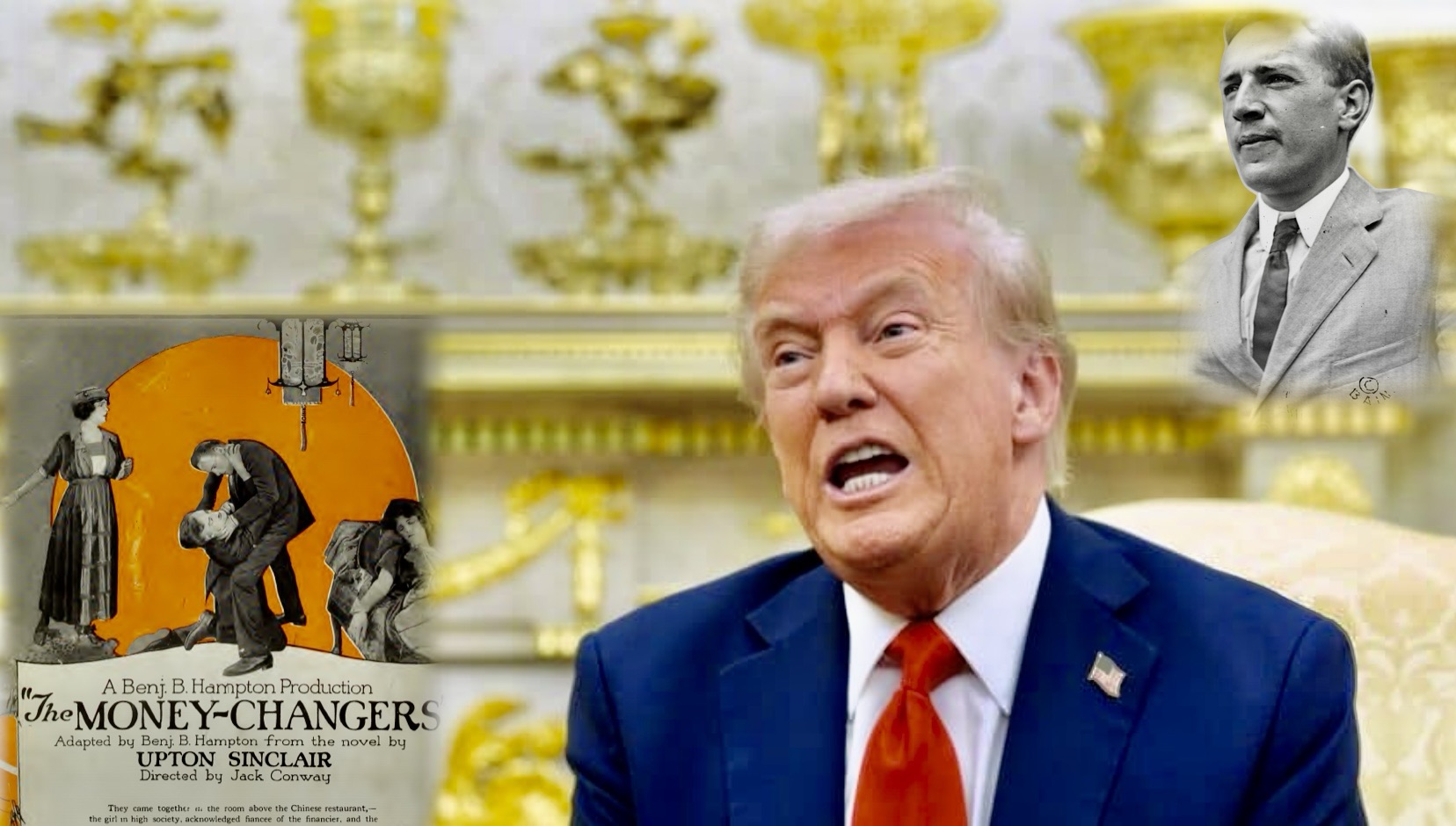
In my younger years, even as a young Watergate-era newspaper guy, I was never a fan of Upton Sinclair.
Oh, I learned in journalism school that he was a celebrated ink-stained ‘muckraker.’ He ripped the lid off the filthy business of the meatpacking industry (“The Jungle,” 1905) not to mention similar send ups of Big Oil (1926), King Coal (1925) and Henry Ford (1937).
In fact, Sinclair wrote something like 100 books during his long and illustrious career. But I never got around to reading any of them.
The spy who snagged me
Until I discovered Lanny Budd a few years ago.
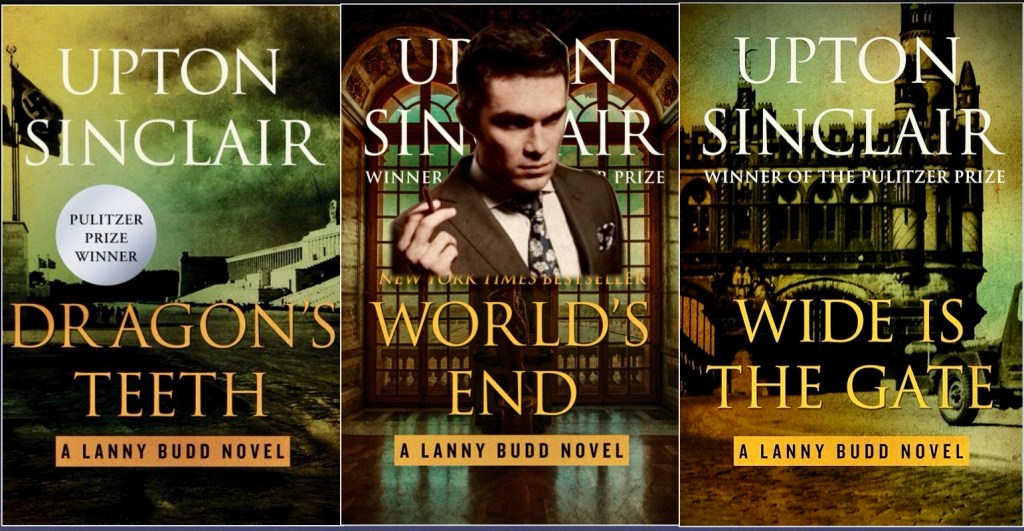
Sinclair’s Lanny Budd was a classical-educated playboy/art dealer born on the French Rivera of an American father and French mother.
And yet, through a series of improbable events, his life becomes dangerously intertwined with the likes of Hitler, Goering, Mussolini, Stalin…even Mao Zedong, during the tumultuous years leading up to and during World War II.
Sinclair wrote 11 Lanny Bud novels, one of which, “Dragon’s Teeth” won a Pulitizer Prize.
Not sure what prompted me to pick up the first one. But it was like eating popcorn. Hooked, I breezed through all 11 over one splendid summer.
I still hadn’t gotten around to “The Jungle,” “Oil!” “King Coal” and Sinclair’s other, arguably more consequential works.
Until recently, when I was scanning one of the daily book promotion emails I subscribe to. Mostly I look for e-books offered at substantial discounts to download to my Kindle.
And I ended up clicking on “The Moneychangers”.
Panic on the Street
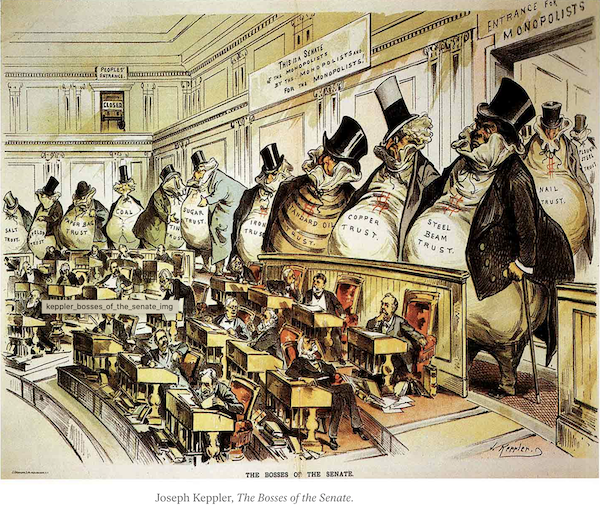
It’s Sinclair’s 1908 fictionalized account of the events leading up to the Wall Street Panic of 1907 as seen through the eyes of a somewhat idealistic (dare I suggest naive?) attorney named Allan Montague.
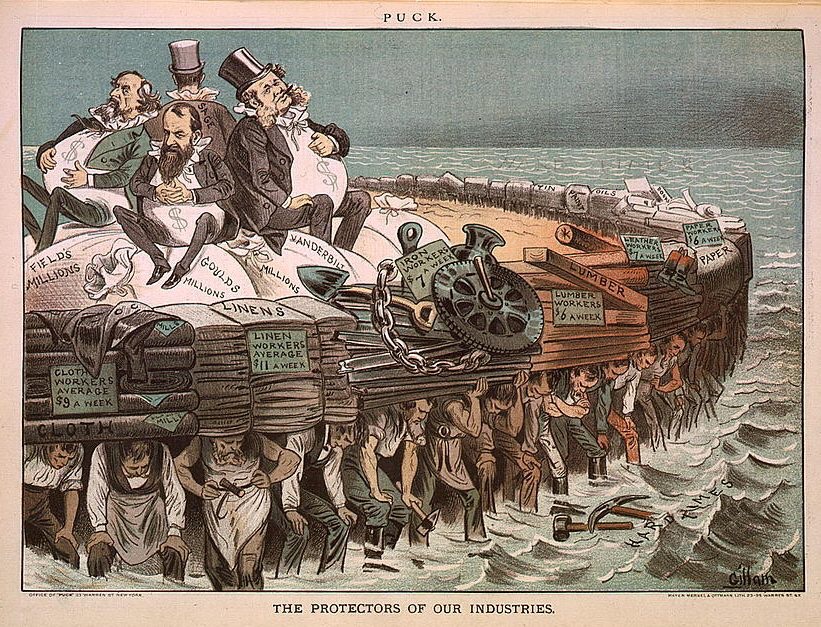
Montague happens along at the tail end of the Guilded Age. When Robber Barons formed coal, oil, railroads and steel monopolies while their huckster allies ransacked banks, trusts and insurance companies for the capital needed to pull it all off.
His innocent bystander status changes when Montague is talked into joining an enterprise intent on running a railroad to the Mississippi Steel Co.
Arriving early for an appointment with the company’s president, Montague kills time by touring the plant.
He might have done better taking a relaxing stroll.
“He gazed down the long rows of the blast furnaces, great caverns through the cracks of which the molten steel shone like lightning. Here the men who worked had to have buckets of water poured over them continually, and they drank several gallons of beer each day.”
Well, at least there was beer.
Reduced to a bloody mist
And then he spotted a man on a ladder with an oil can in his hand servicing a fast-spinning steel shaft.
“Instantaneously, as if by the act of a magician, the man upon the ladder had disappeared; and instead there was a hazy mist about the shaft..”
“For a period which could not have been less than a minute, Montague stood staring at the horrible sight; and then slowly he saw what had been a mist beginning to define itself as the body of a man whirling about the shaft.”
“When the revolving had stopped entirely, they proceeded to cut the body loose; but Montague did not wait to see that. He was white and sick, and he turned and went outside.”
Oddly, that account of the brutal demise of a working stiff who toiled in misery so his bosses could wallow in wealth wasn’t the passage that really grabbed me about Montague’s um, pilgrim’s progress.
No, the grabber occurred when our protagonist attends a lavish party in Newport – home of cliffside mansions, luxury yachts, debutants waiting to “come out,” their socialite mothers and their Masters Of Industry fathers.
Montague engages in a casual conversation with his hostess, a certain Mrs. Billy.
The cultivation of enemies
Asked if he had any enemies, Montague said “no one special.”
She: Well, you should cultivate some. Enemies are the spice of life.
He: “I had never thought of it.”
She “What is there that wakes one up more than a good, vigorous hatred…the chief zest in life is to go after someone who hates you and to get him down and see him squirm.
He. “It sounds rather barbarous.”
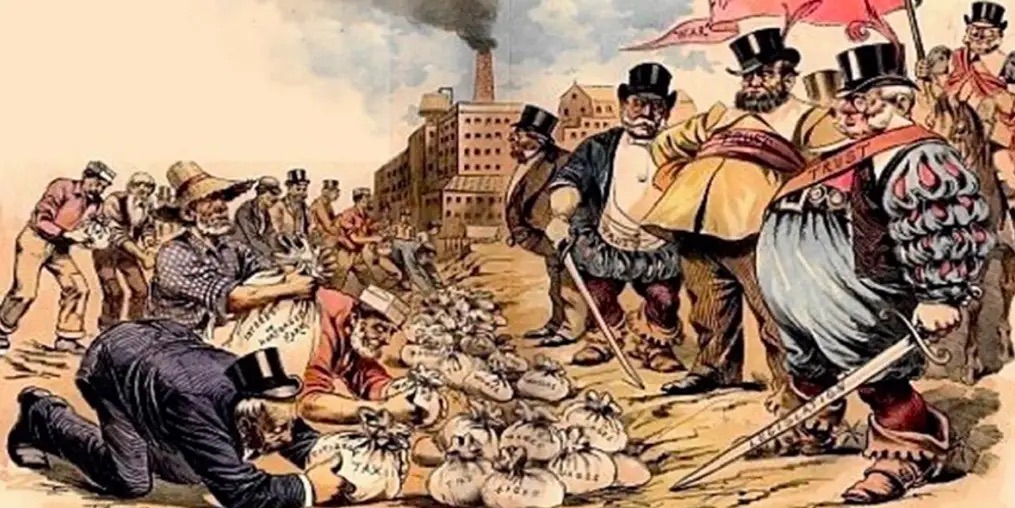
She: On the contrary, it’s the highest reach of civilization. That is what society is for – the cultivation of the art of hatred. It is survival of the fittest in a new realm.
The Art Of Hatred as the “highest reach of civilization.” Who knew?
More to the point, how did Sinclair know that more than a century before Donald Trump and his gaggle of puppet masters turned the Art of Hatred into the New American Ethos?
No wonder our Great Orange Cheeto considers the Guilded Age to be the very apex of American greatness.
The more things change

And I suppose that’s what haunts me about “The Moneychangers.”
Sinclair’s words ring as true today as they did in 1908.
Only the names have changed.
Rockerfeller morphed into Musk. Vanderbilt to Gates. Carnegie to Zuckerberg.
The only difference being that – along the way to buying elections, amassing obscene wealth and screwing the workers – the Rockerfellers, Carnegies and Vanderbilts at least felt guilty enough to build the occasional library, found the odd university and otherwise give back the tiniest fraction of what they had amassed.
Today’s billionaires prefer to devote their disposable incomes to financing disinformation campaigns that make Americans hate other Americans even more than they already did.
And Trump is certainly no William McKinley, our most memorable Gilded Age President.
Both loved tariffs and were hands-off-business pols. But McKinley at least had the good taste to not drench the Oval Office in gold paint, build a fighting cage on the White House lawn or openly peddle pardons for profit.
Alas, Sinclair’s moneychangers were rank amateurs compared to America’s New Gilded Age Privileged Class.
At the end of “The Moneychangers,” the same titan who engineered the panic in the first place is enlisted by the government to fix the mess he created – with taxpayer dollars, of course, certainly not his own.
And a sadder but wiser Montague is asked by a friend what he intends to do next.
“He replied: ‘I am going into politics. I am going to try to teach the people.’”
As I said, our hero was a tad naive? Apparently so was Upton Sinclair.



Ralph Haben has died at 84.