

I wrote this piece for publication in The Sun. Dr. Barrow is a GNV treasure.
Images frozen in time
An iron horse moving down the middle of Main Street past rows of real horse drawn carriages.
Three women in stylish bonnets enjoying a sunny boating trip on Melrose Bay.
Seven Black children, lined up by order of height, in front of a ramshackle log cabin.
That last image fascinates Mark Barrow.
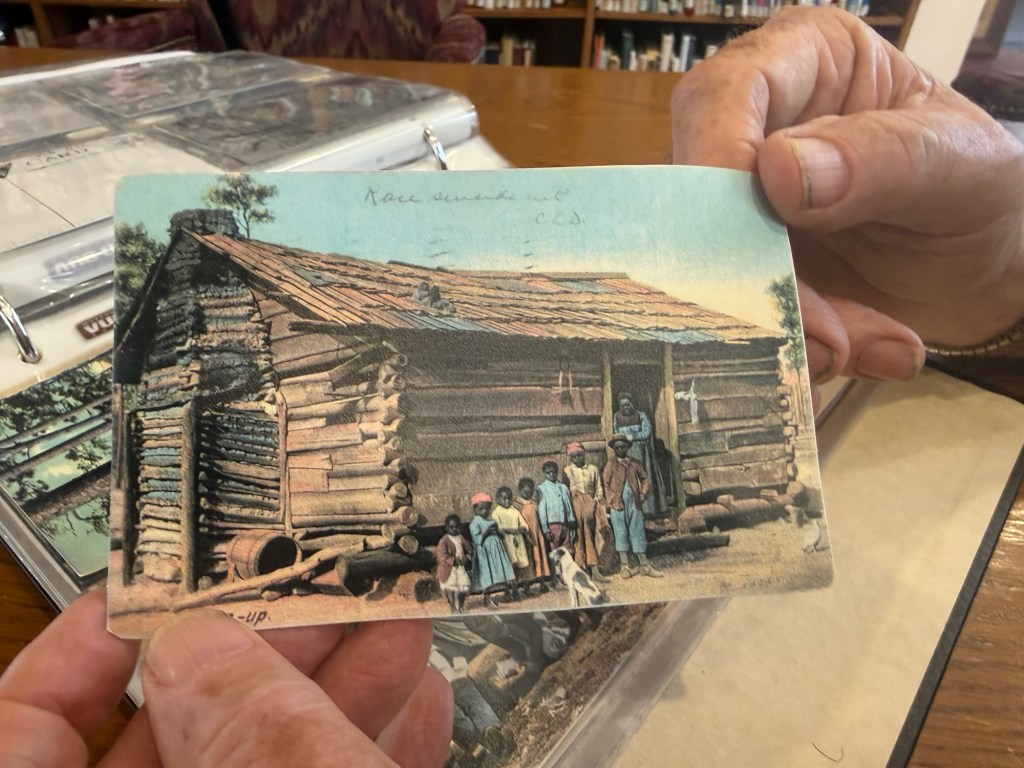
He points out that the mortality rate for Black children in Florida during the early years of the 20th century was about 40 percent.
A physician by training and historian by inclination, Barrow recalls visiting a Clewiston cemetery, where he saw gravestones for six black children.
“It just tears me up. Every single one of them died within two years. But these children all survived” he said, turning back to the colorized photo titled “Seven-up.”
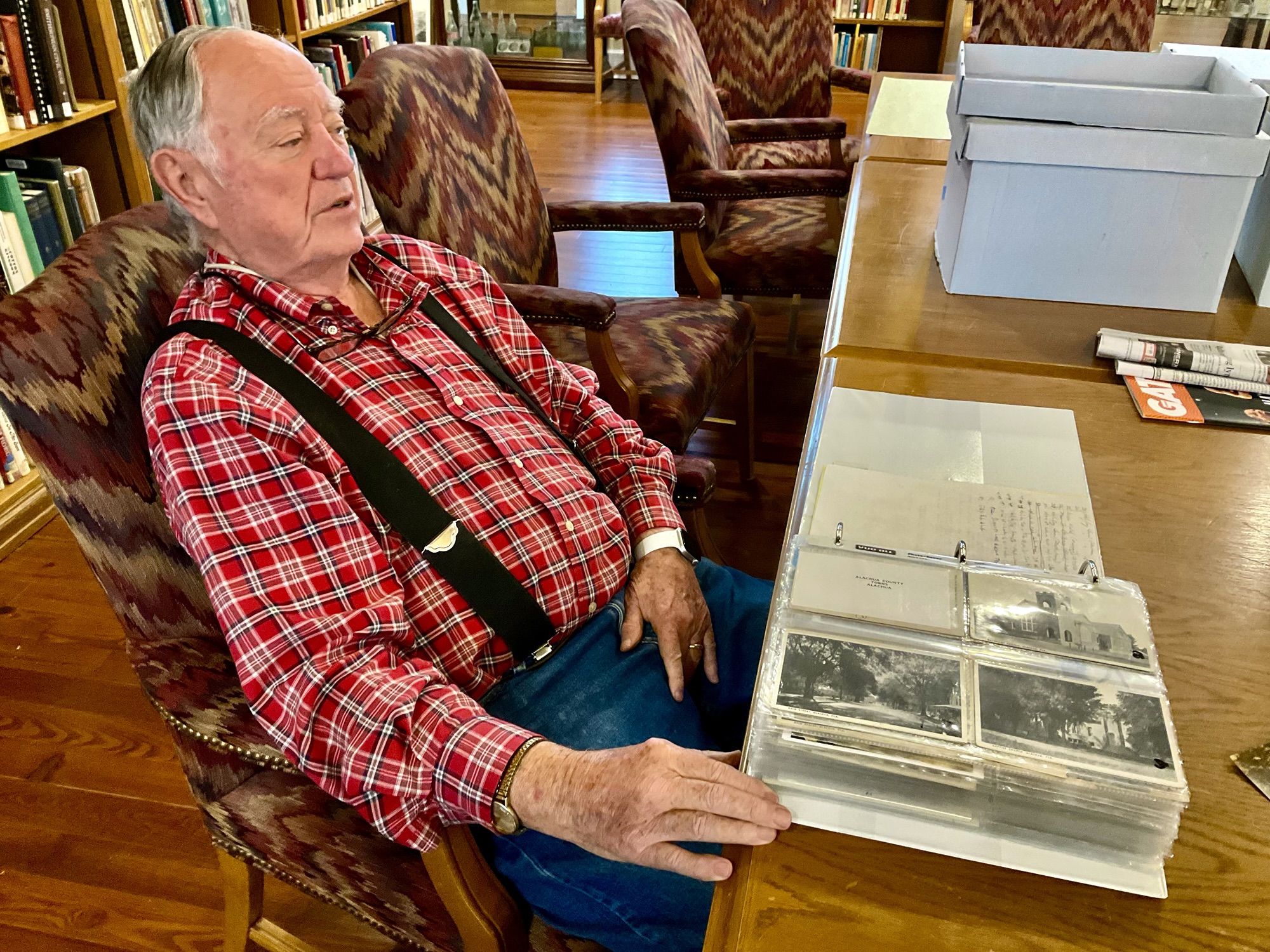
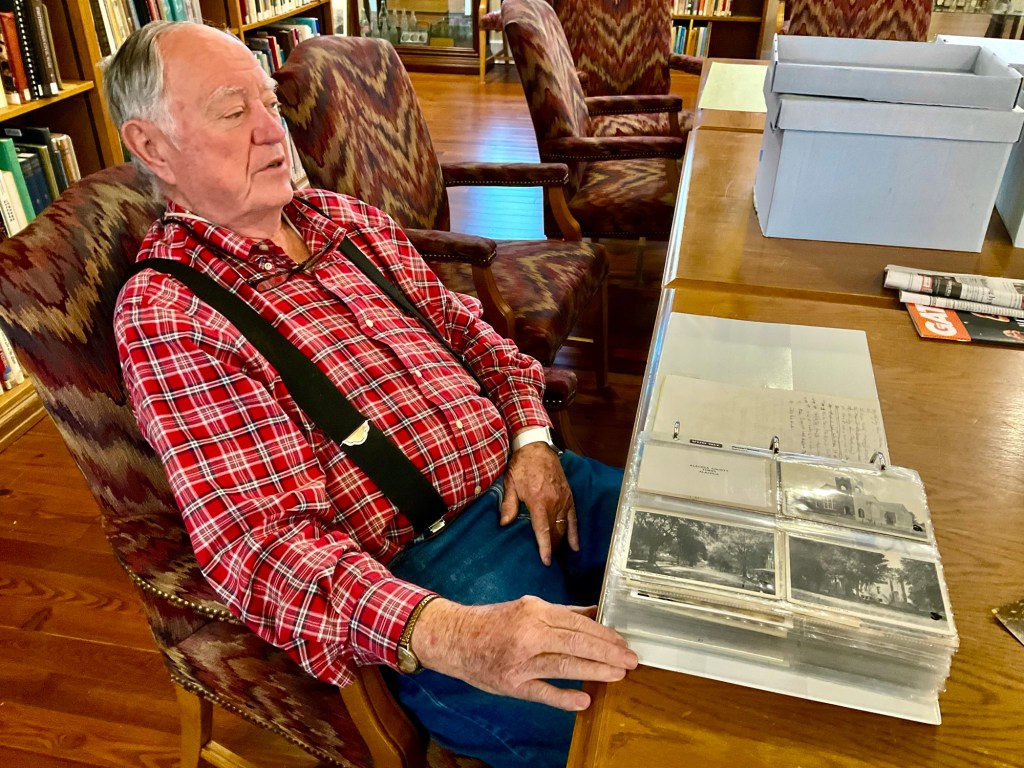
The photo collection that Barrow pours over, and adds to just about every Wednesday afternoon in a back room of the Matheson Museum’s archives building, are not found in yellowed, dusty history books.
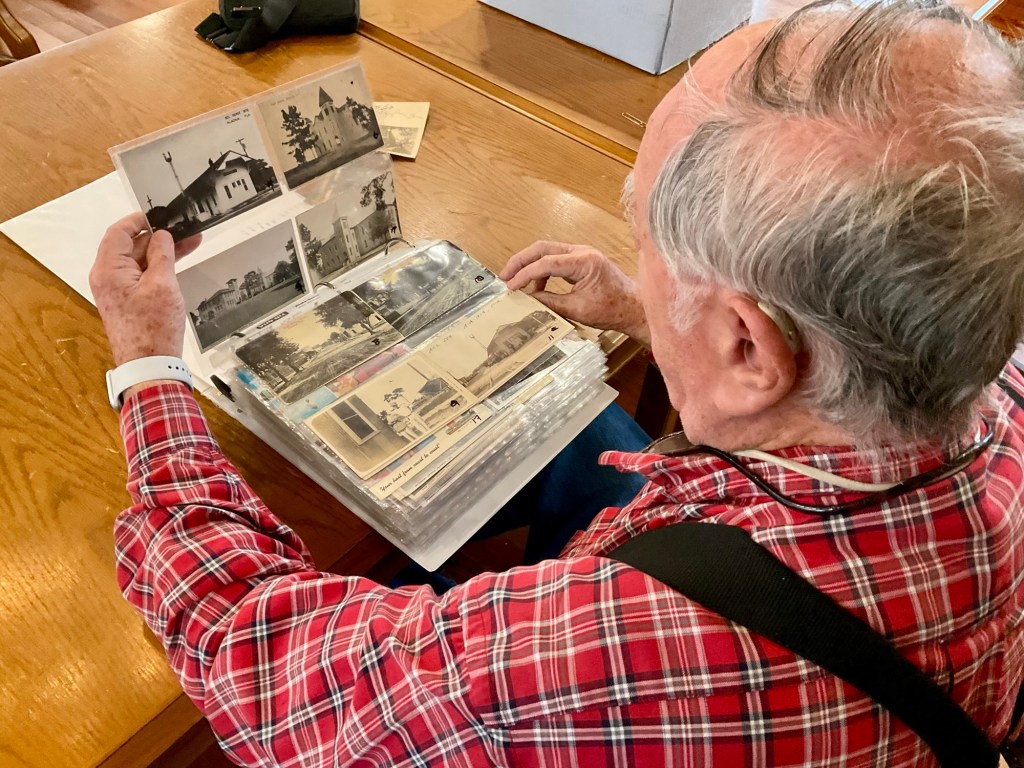
Rather they are just a few of the more than 4,000 postcards Barrow has been diligently searching out and acquiring for more than half a century. Most of the postcards in his collection depict scenes from the past taken in Gainesville and surrounding towns, although he also searches for other Florida cards.
“I believe I now have about 98 percent of all the postcards ever shot in Alachua County,” he said.
And there is a reason this 90-year old Gainesville cardiologist and Matheson Museum founder calls these postcards “miniature works of art.”
Many were shot in the first decades of the 20th century by men hauling bulky, tripod supported box cameras. They spread throughout Florida – throughout America really – capturing images – first on glass plates and, as the technology improved, on large negatives.
They captured images of laborers toiling away in sea island cotton fields, on turpentine plantations and in citrus groves. Of floating vegetation islands on Orange Lake, cattle grazing on La Chua Ranch and phosphate mining in Gainesville.
“The cards show buildings, people, street scenes and churches,” he said. “Original downtown businesses before automobiles with horses and wagons on the streets. They show what life was like back then.”
And some of the most striking are in colors that, amazingly, have held their vitality over the decades.
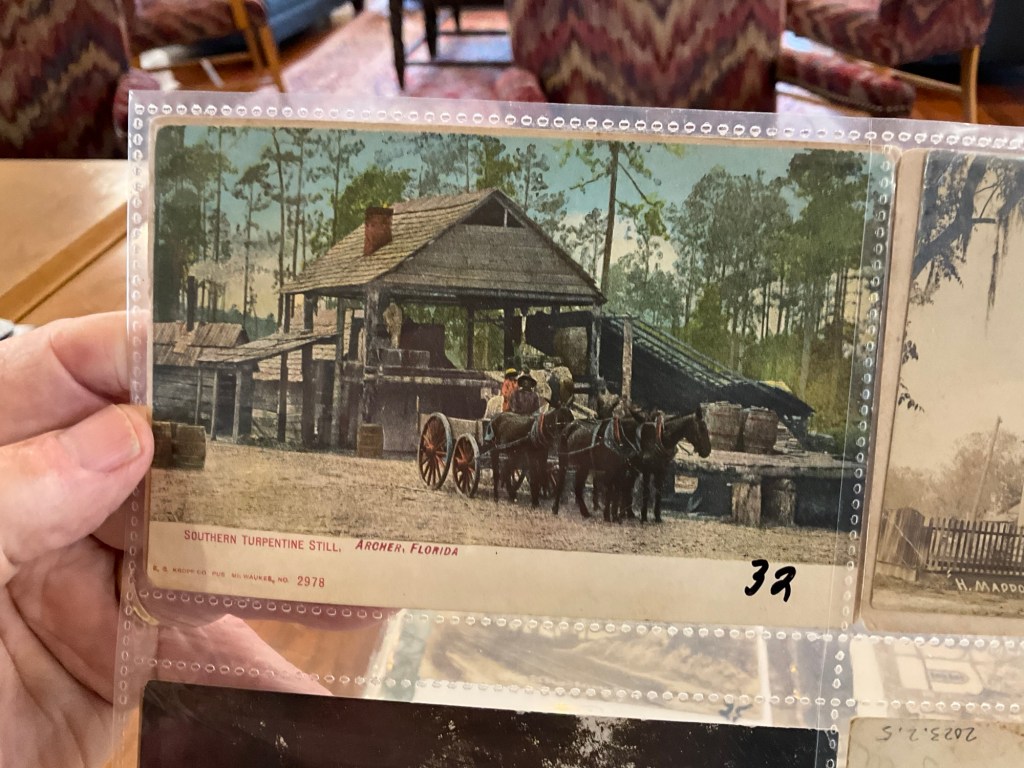
The best of them were printed in Germany “because they had the best quality color.”
The “Seven-up” postcard was printed in Frankfort, Germany, and distributed by a company in Portland Me.
And yet, for all the labor involved – and never mind that some were shipped halfway around the world and back – these frozen in time images originally sold for just one penny each.
These days it is not unusual for Barrow to pay $30 or more on his eBay hunts for newly discovered postcards.
Barrow’s passion for early postcards began in the early 1970s when he was still establishing his medical practice.
“Some guy came through town and he had collected 2,000 postcards,” he recalled. “I bought the whole lot of them. That’s what started my interest.”
Over the years he would visit antique shops, used bookstores and the like. “Then I started advertising in postcard journals, going to postcard shows and, eventually, eBay. I was very aggressive.”
In 2009 Barrow published a coffee-table book titled “A Penny For Your Thoughts: An Album Of Historic Postcards of Alachua County” In it he traces the history of penny postcards, which first made their debut during the Columbian Exposition of 1898, in Chicago.
“By 1908 more than 600 million postcards had been handled by the U.S. Post Office, and collecting postcards had become an American addiction,” he wrote. “No town wanted to be left out and deprive its citizens and visitors of the opportunity to mail visual evidence of its best advantages and finest views to those far away.”
Perhaps rarest of all in his collection is a postcard purporting to depict Florida’s oldest Methodist church.
It was located in Newnansville, original seat of Alachua County. A town that no longer exists.
What remains of Newnansville today is that vanished church’s cemetery.
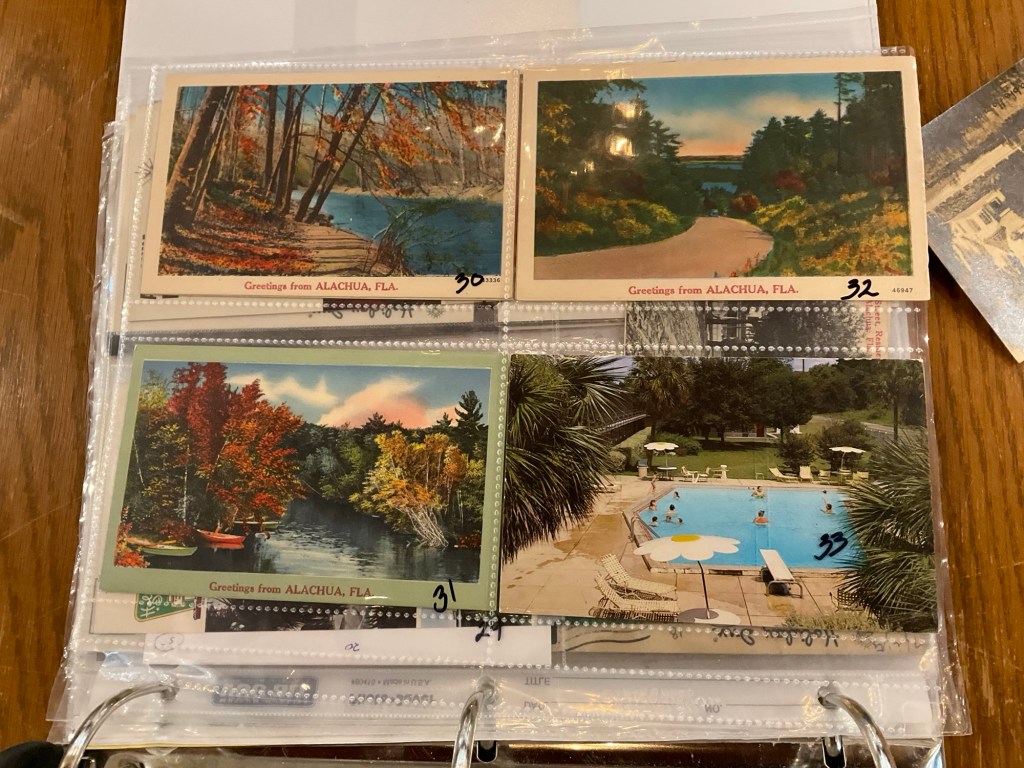
His collection includes a colorful UF campus plan published in 1906, as well as postcards depicting virtually all of UF’s original red brick Southern Gothic buildings.
There is a 1907 card of Archer residents in their Sunday best lined up in front of C.D. Wood’s General Merchandise store. There are cards showing a fish camp on Cross Creek, a train station in Hawthorne, and fishermen on the Santa Fe River circa 1910.
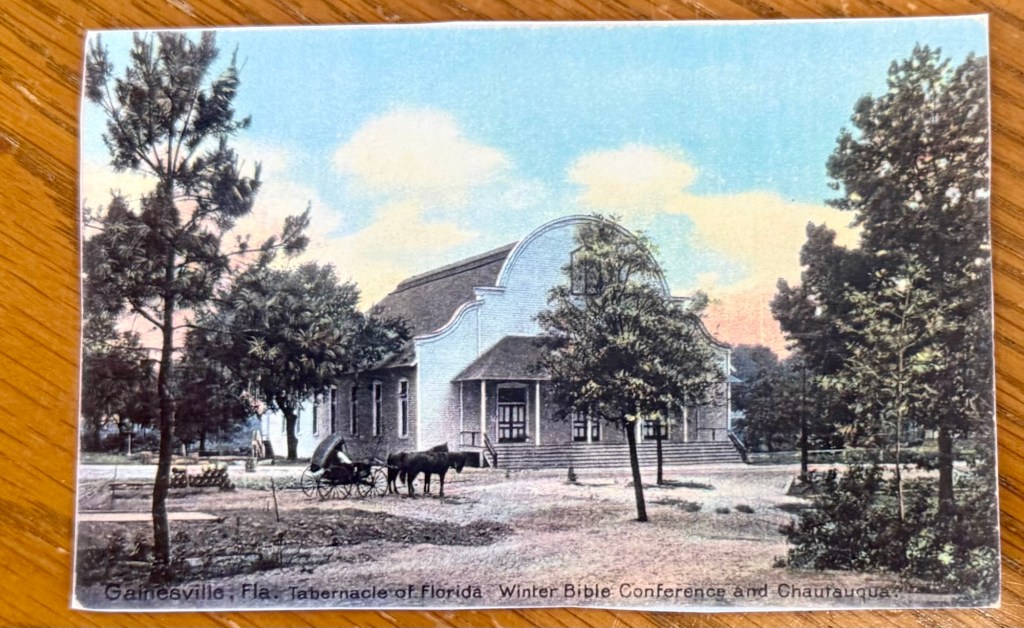
Barrow is especially pleased when he can find postcards of local buildings that no longer exist. The Tabernacle of Florida building, for instance, occupied the space where the church-turned Melting Pot restaurant-turned Matheson archives building now sits. The turquoise colored tabernacle was home to an annual winter bible conference and hosted frequent Chautauqua events.
“The City bought it in 1926 and was going to turn it into a convention center, it could seat 2,000 people,” he said. “But then they gave it to the American Legion and it later burned down. It was the first building in that location.”
Barrow’s post card collection is available for viewing at the Matheson. They now fill 13 albums. And when he finds duplicates of cards already in his collection, they are sold in the Matheson’s store.
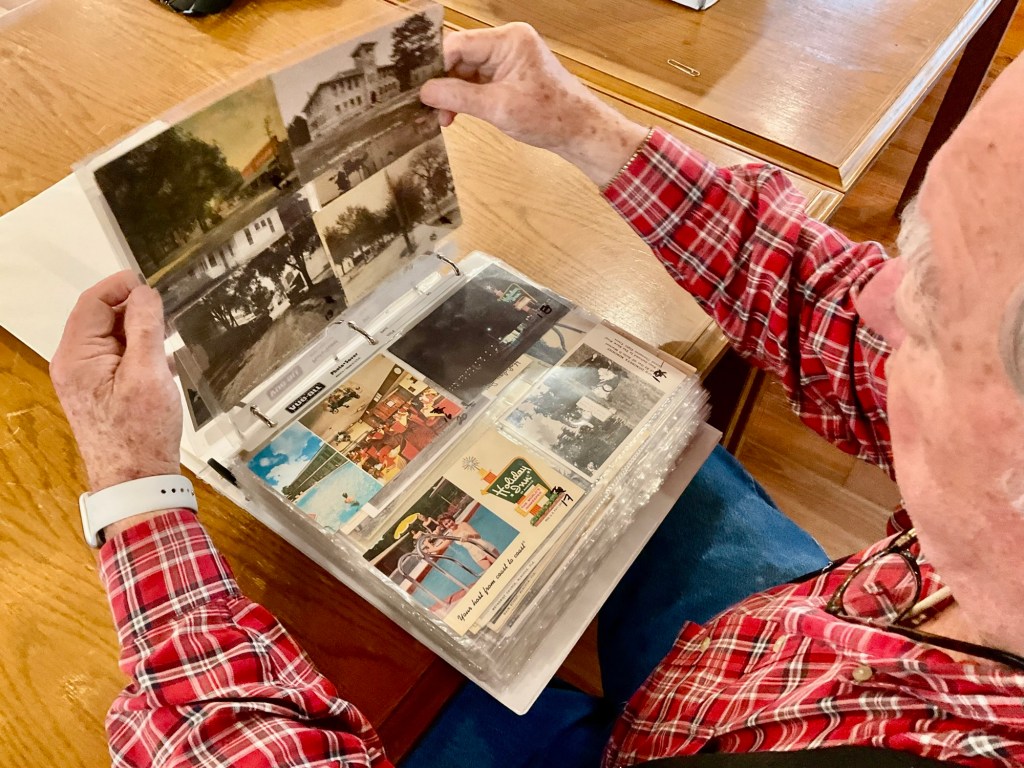
“ He’s 90 years old and still keeping his hand in,” said Matheson director Salvatore Cunella. “Just about every week he shows up to work on his collection. People don’t think about postcards as a form of historical record, but his collection is a great research tool. It’s phenomenal really.”
Barrow calls his collection “my magnificent obsession. I’ll continue working on it until I can’t anymore.”
Because many of the recovered postcards contain fading personal greetings to friends and family members, the information to be gleaned on the flip side can be as enlightening as what’s on the front.
Consider the postcard of the locomotive on Main Street. It was mailed in January, 1908 to Tammie Lee Wylie, in Bridgewater, Mass. by a woman who was apparently visiting Gainesville to wrap up family affairs.
“Dear Grandma: I am over here today seeing about the taxes and trying to get things straight about the house and lot. Hope you are well and having a good time. Regards to all.” Signed June Lee.

 FreeGNV