

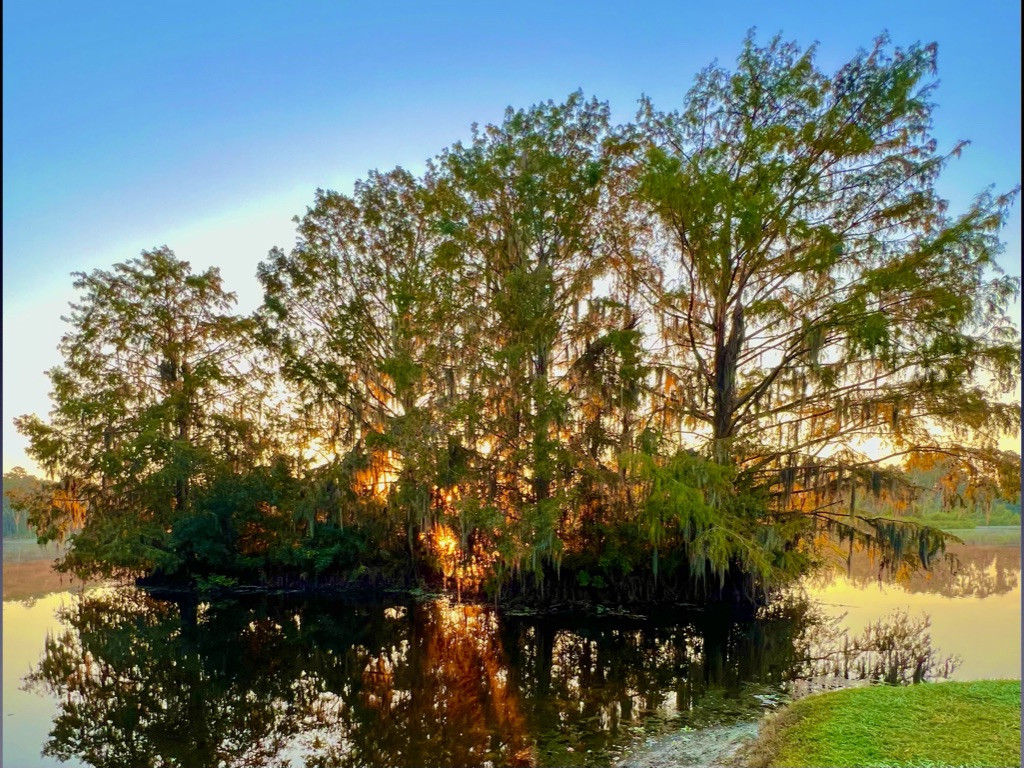
“A few days ago, a man I know, a chap from the north, asked me why I cared if the moss was sick, it’s only a damn pest, he said. I fancy myself a fairly reconstructed Southerner, but what I thought was ‘Yankee go home!’ A man who thinks of Spanish moss that way made a bad mistake coming this far south.”
Archie Carr: A Naturalist in Florida.

Like the late Florida naturalist Archie Carr, I too am fascinated by Spanish moss. As a photographer I seem to be forever trying to capture the essence of its light, fabric and texture. Trying to really see what Carr called “the most influential plant in the southeastern landscape, the most widespread and by all odds, the most distinctive.”
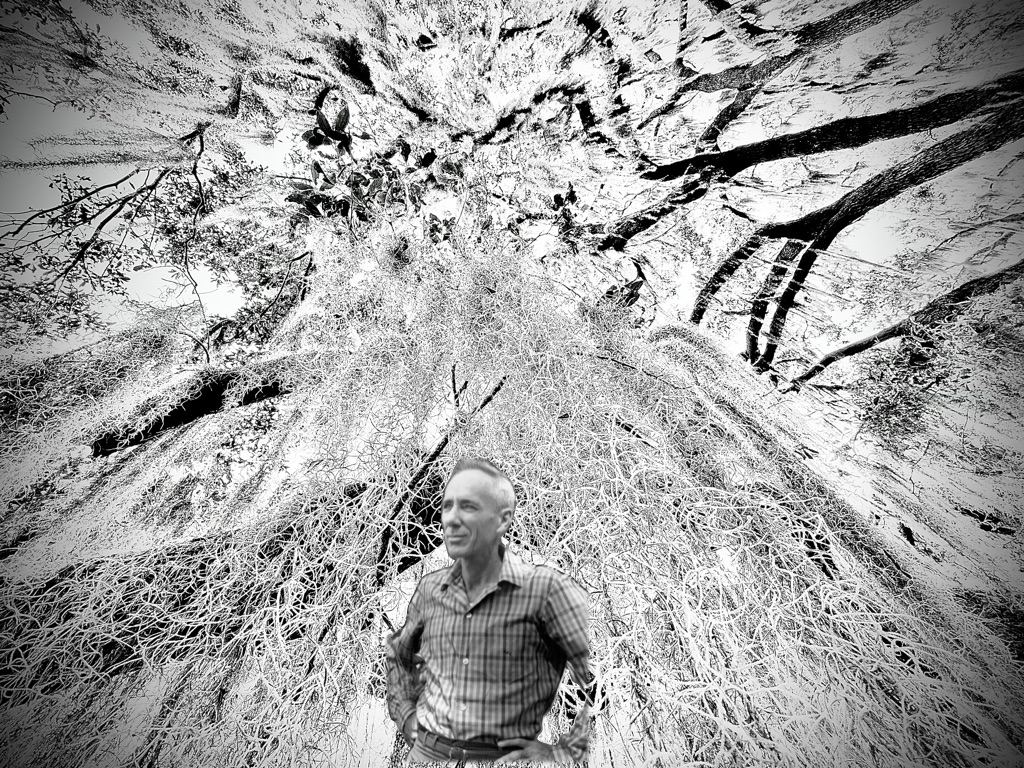
But Archie himself would tell me that trying to capture the essence of Spanish moss is a fool’s errand.
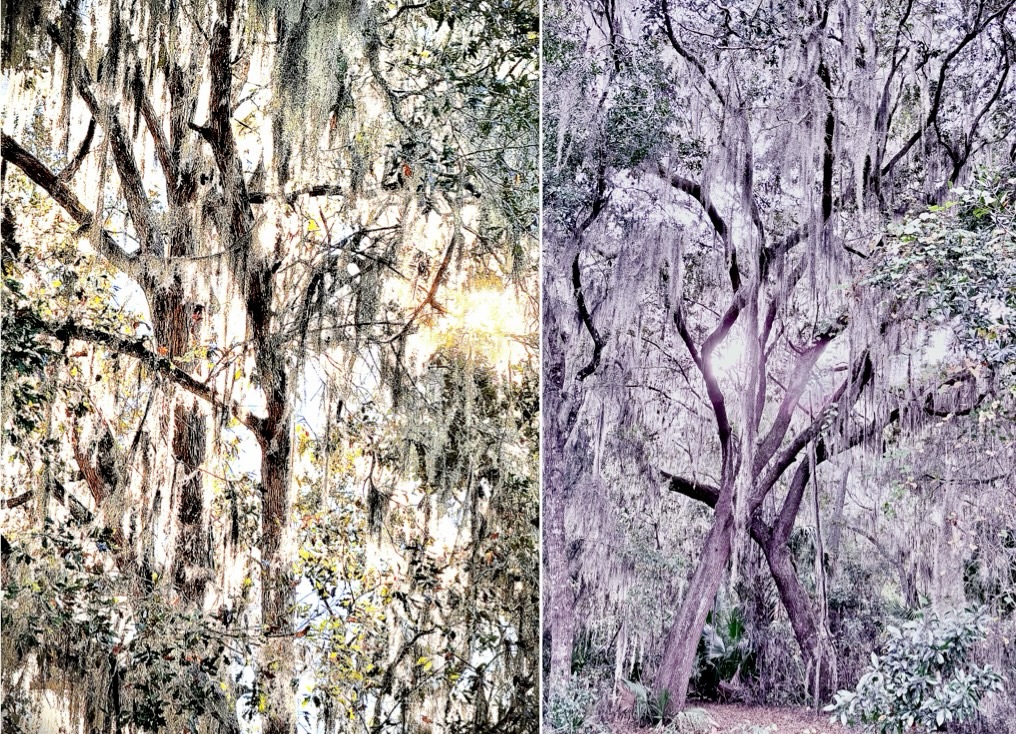
“Spanish moss hanging in trees has a subtle changing look that painters of landscape find hard to capture on clear days. When the moss is dry, there is something about the gradient of light and density of independent clumps that eludes both the brush and the pencil.”
And the camera, I might add.
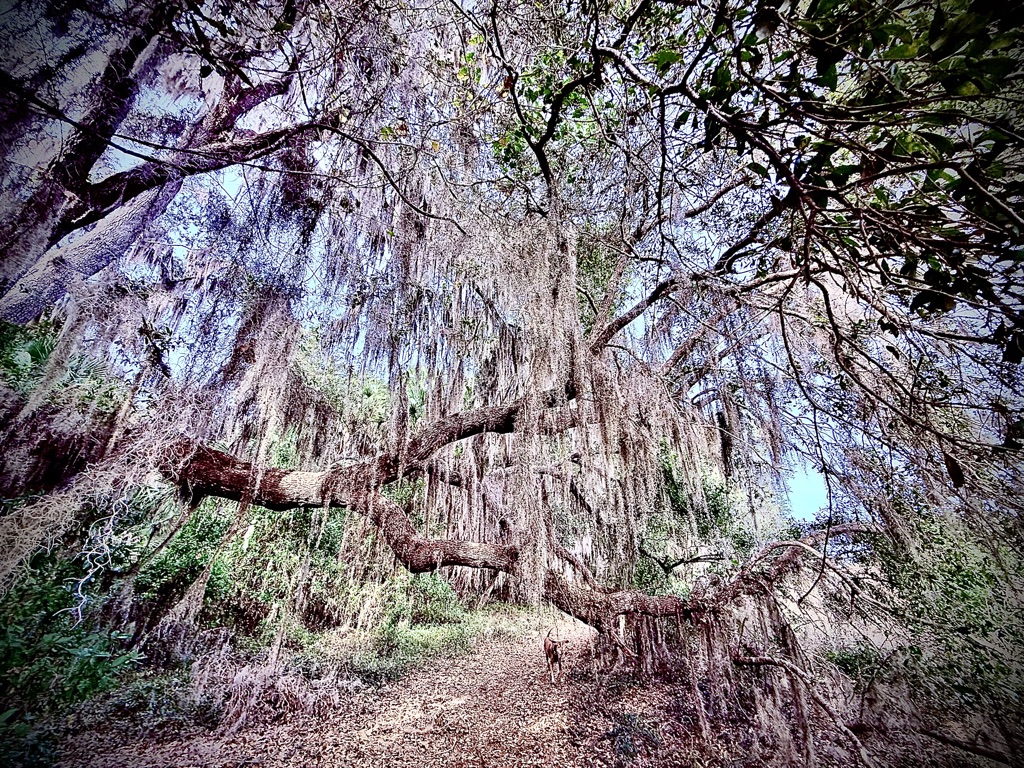
“A big old live oak without its moss looks like a bishop in his underwear. Lord only knows how the whole live oak hammock would look if its moss should disappear.”
Great! Now I can’t get the image of a bishop in his underwear out of my mind.
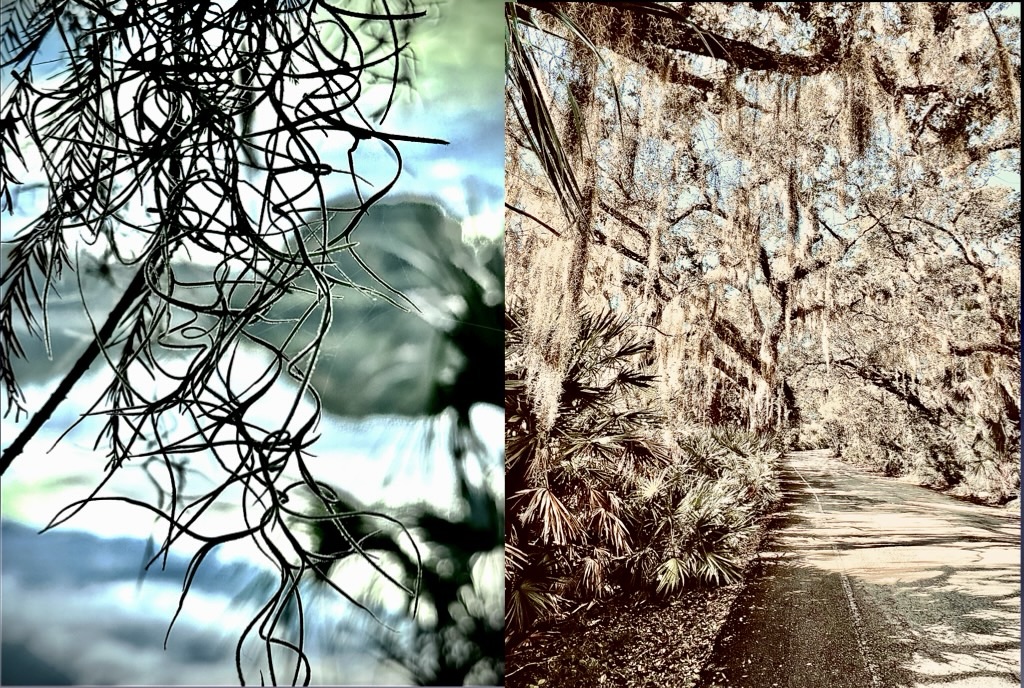
“I can’t tell what the trouble is, but the attempts at realistic delineation that I see are all too stiff or fuzzy or dense or in some other ways, distressing. Freer gropings for the spirit of moss make it seem like a thing the artist has not known long and lovingly enough. The trouble is both texture and illumination.”

“The festoons fall in soft tapers that are opaque gray above and thin out into translucent spikes below. And much of the time the moss is in motion. The light tips make thin wind gages that dance outward, downward in the moving air. To a wise eye, these tell the speed and directions of the wind more accurately than dancing leaves or swaying branches do.”

“The year my wife and I were married, we lived for a while in a little field station that the University of Florida’s biology department had on the shores of Newnans Lake. It was depression time then, and our neighbors on the lakeshore were all squatters who, to keep body and soul together, trot lined for catfish and soft shell turtles, illegally trapped bream bass and speckled perch and picked moss.”

“It is years now since I last saw a moss truck broken down the road shoulder or even running on the road. In Florida, the moss factories have all been shut down. The moss pickers all seem to be gone. I don’t know why, because moss hair was good stuffing. But maybe plastic hair is better. Or possibly picking moss just got too symbolically menial for our times.”

“The Moon blazed and faded. I remember, as separate high clouds went by on a wind too high to stir the moss; in one moment, the vaulted rooms of the moss forest were flooded with silver light, and the next, the glow worms down at the pond’s edge were torch bright in the dark.”
Fools errand or not, I believe will continue to pursue the essential image of Spanish moss.
With thanks to Archie Carr, who devoted an entire chapter on Spanish moss in his masterpiece, A Naturalist in Florida: A Celebration of Eden.

 FreeGNV