


This is the second of a series of blogs about the e-bike revolution – or more accurately, the e-personal mobility revolution – in autoAmerica. If you missed the first one, read it here.
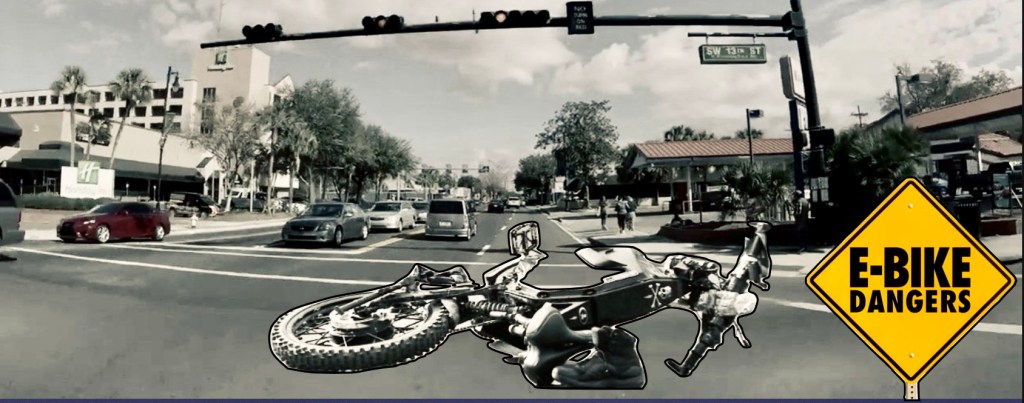
Listen, if you think e-bikes are some passing novelty, you haven’t been paying attention.
I am struck by the number of auto makers getting into the e-bike business: Ford, General Motors, Jeep, BMW, Mercedes and Audi, just to name a handful.
Heck, Ford is making e-bike versions of Mustangs and Broncos.
Corporate giants like that aren’t rolling the dice. They recognize an emerging market when they see it.
But there’s no denying that as more and more e-bikes appear on our streets and roads, e-rider fatalities and injuries are going up as well.
Consider this cautionary bulletin from the American College of Surgeons.
The worldwide sales and use of electric bicycles (e-bikes) have grown dramatically in the past decade, particularly among children and adolescents, becoming an increasing source of road traffic-related morbidity and mortality. Surgeons around the world have witnessed a serious pattern of e-bike-related injury and death.
The College of Surgeons makes several recommendations, few of which are likely to be adopted anytime soon: Mandatory helmet laws. Regulating and enforcing e-bike speed limits. Licensing e-bike riders.
And the big one: Improving road designs.
Urban design can promote bicycle lanes and safe routes for e-bikes to travel. An unanswered question is the role of traffic accidents in the injuries being witnessed, and what steps to promote road safety should be prioritized. Should e-bikes travel on sidewalks and boardwalks or in streets, in protected bike lanes, and be allowed on multi-use trails and unpaved roads in open spaces?
Basically, the e-micro mobility movement is growing faster than society’s ability – or willingness – to safely integrate them into the urban environment.
To be clear, I approve of the personal mobility revolution that is quickly overtaking GNV and other cities. I believe that anything we can do to get people out of cars and onto alternate forms of mobility, especially for short trips around town, is a good thing.
As I said in my earlier blog: There is safety in numbers.
That said, a lot of e-bike riders, like a lot of pedal-power cyclists, are understandably afraid to share the streets with cars. But when you add e-bikes capable of high speeds to the mix, safely sharing narrow and often cracked and aging sidewalks with pedestrians, pedal cyclists and baby buggy pushers and the like, only further complicates the logistics of urban mobility.
What to do?
Yeah, I know, I’ve heard it again and again: Those “things” are dangerous. Their users dart out into traffic, don’t obey the rules of the roads and keep getting run over. Those “things” ought to be banned.
This view most usually voiced by car drivers. Who, of course, all scrupulously obey the rules of the road.
I’ll make you a deal, autoAmerica: I’ll agree to ban e-bikes the moment you agree to ban those over-sized, over-powered testosterone machines that Detroit sells like hot cakes. Talk about death on wheels!
Listen, E-scooters don’t kill people. Cars kill people. (To paraphrase a well known special interest group that doesn’t need naming here.)
The truth is that in autoAmerica we have for generations been designing our streets and roads for the primary purpose of enabling people in cars and trucks to drive as quickly as they like through our cities and towns.
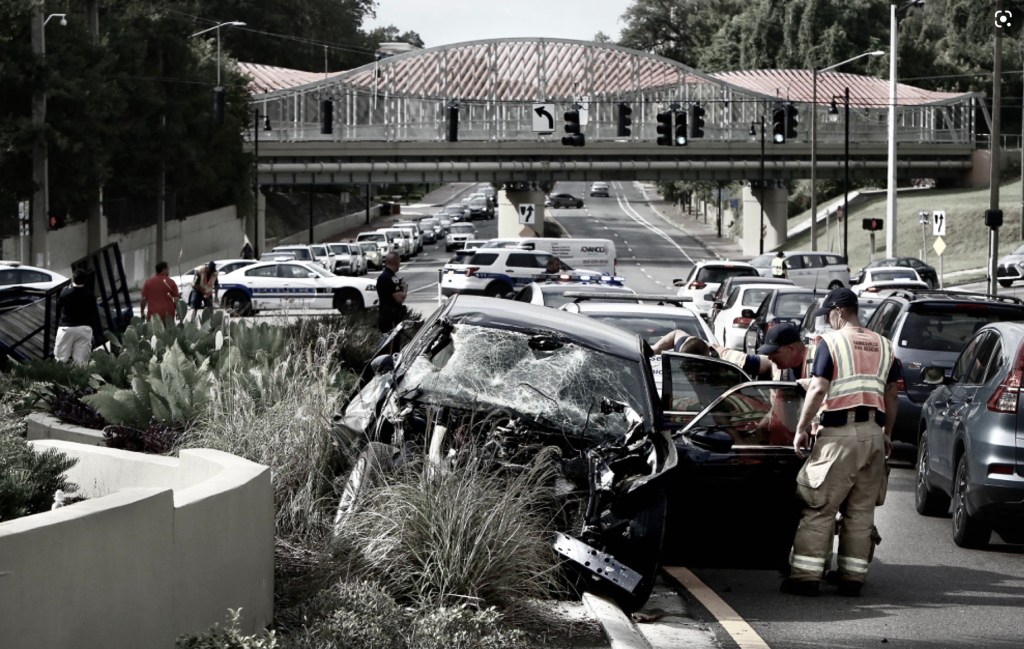
And you can see the consequences every day on 13th Street, 34th Street, University Avenue and so many other GNV roads and streets.
And you know what’s rarer than protected bike lanes around here? The sight of a GPD patrol car pulling over speeders and distracted drivers.
Not that I blame them. Traffic enforcement is a dangerous business for cops. Sometimes the people they stop are full of rage and armed. And police officers who pull over cars get run over by other cars with distressing frequency in autoAmerica.
And anyway, the police have more important business to attend to. Like writing all of the requisit after-incident (I won’t call them after-accident) reports every time a pedestrian, cyclist or scooter rider is killed by a motorist.
And here’s the thing. Complain about those “things” all you want but E-bikes aren’t going to go away. Their number is only going to increase. Same with e-scooters, e-skateboards and e-whatever the hell those over-powered one-wheeled thingies are (Chopper unicycles?).

When you come right down to it, the single most effective thing we can do in GNV, and in other cities, to insure that all users are able to share our streets and live to tell about it is simply this:
SLOW THE CARS! BY ALL MEANS NECESSARY!
Seriously, GNV, we need to talk a lot more about this.
But more on that in a future blog post.

 FreeGNV