

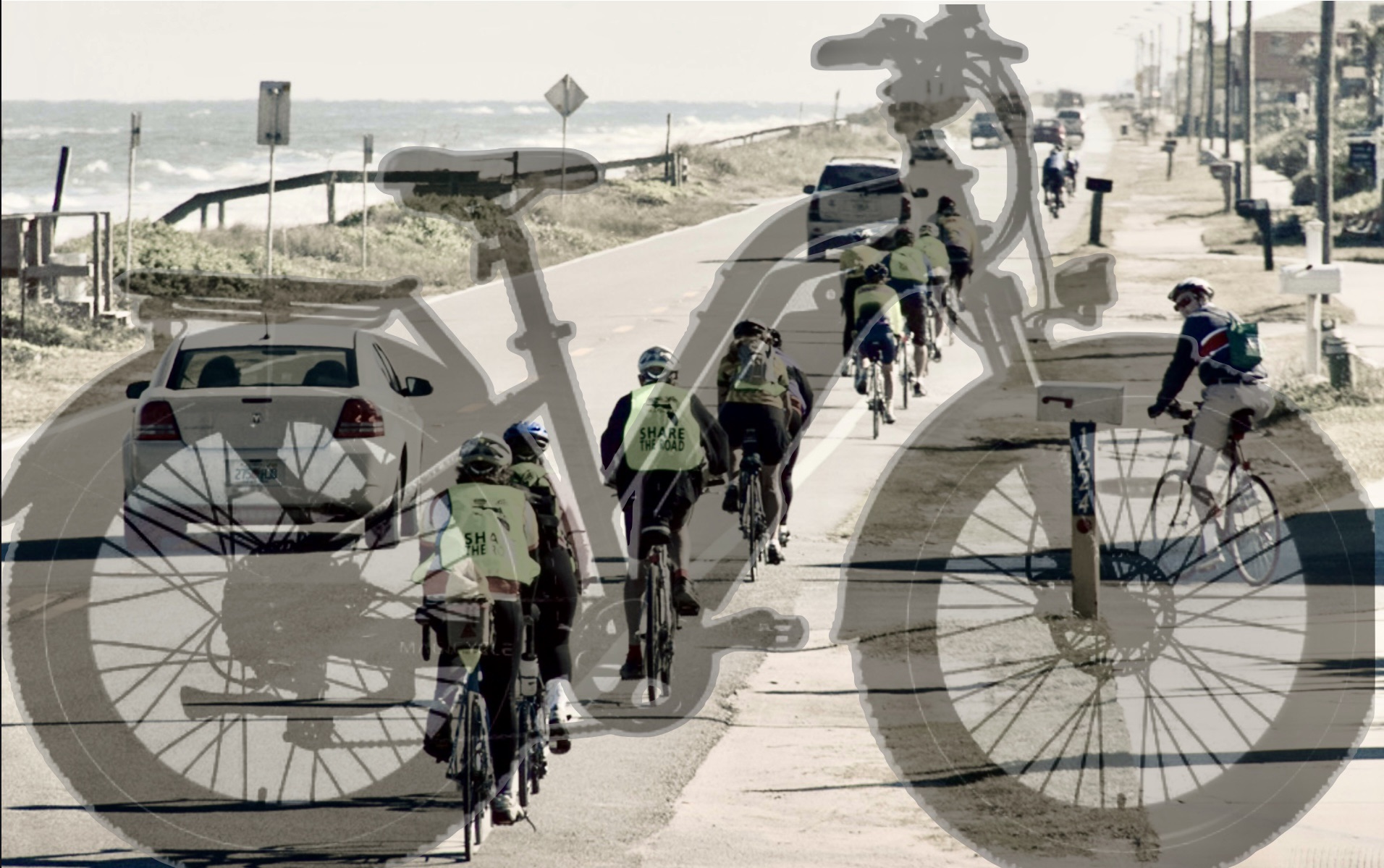

When I was executive director of Bike Florida we spent many staff sessions talking about the, let’s just say logistics, of allowing e-bike riders on our annual spring tours.
Some 500-plus cyclists participated on our week-long tours. Tours that typically followed many rural roads and passed several towns and cities.
And, always, the major focus for staff was figuring out how to get hundreds of cyclists safely from Point A to Point B without anybody getting run over by cars.
On the whole we were remarkably successful. Just once in a quarter century of touring did we lose a cyclist. And that involved a distracted kid in a pickup truck who drifted into a marked bike lane and killed a very nice gentleman who had come all the way from Arizona to tour in Florida.
Our hesitation over allowing e-bikes to participate in our tours didn’t stream from some elitist attitude, i.e. if you can’t peddle your own damned self than we don’t want you.
Rather, it was a question of velocity vs., um…many moving objects, that gave us pause.
What mostly kept our cyclists safe on our spring tours was, simply, their sheer numbers. A driver tooling merrily along a country road at or above the posted speed limit may very well fail to notice a single cyclists occupying that precious few feet of space on the right hand side of the road.
But he would literally have to be blind to not see dozens, scores and even hundreds of cyclists all riding one behind the other for miles along that same road.
There really is safety in numbers.
But what happens if, scattered among those hundreds of cyclists moving more or less in tandem at, say, 10 mph, there are maybe 30 others on e-bikes capable of doing more three times that speed?
Will the e-bikers be content to slow down, fall in with and follow the flow? Or will some be tempted to weave in and out of the – let’s call it two-wheeled herd – using their superior speed to get out in front..wherever that front may be?
And in the course of all that weaving in and out of the herd along a very narrow edge of asphalt, what are the chances that either an e-biker or a pedal powered cyclists might abruptly stray, or be squeezed, out into the center of the lane where the traffic flows?
I left Bike Florida before that issue was settled. And in any case, the organization’s mass tours ended with Covid-19. These days Bike Florida sponsors much smaller rides and works with communities to stage cycling festivals.
Since then, however, e-bikes have become increasingly acceptable on mass tours. Even RAGBRAI, the bike ride across Iowa and the biggest tour of all – with riders in the thousands not the hundreds – accepts e-bikes.
So maybe we BF staffers worried too much.
But years later I still think a lot about the logistics of e-biking. Not to mention the logistics of e-scootering, e-skateboarding and e-whatever the hell those really fast one-wheeled contraptions out there are called – really, all of the other increasingly diverse human-scale vehicles that people are using to get around these days.
I wonder how all of these new forms of personal transportation are going to play out, not on bike tours, but in an urban environment. And especially in a university city like GNV.
More on that in a future blog post.

 FreeGNV