

I wrote this piece for publication in The Gainesville Sun

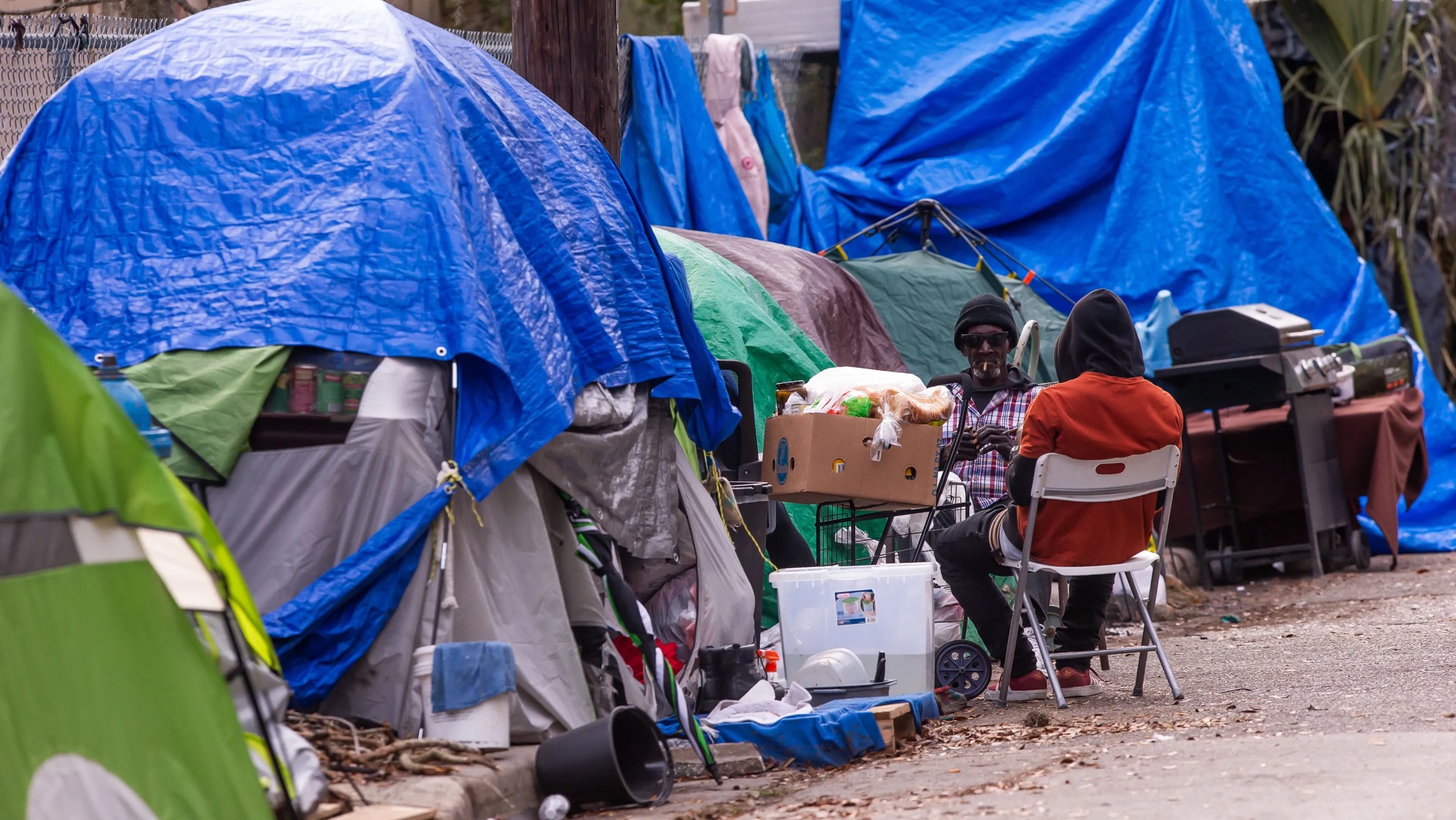
On. August 19, City officers and employees descended on an illegal homeless encampment behind Grace Marketplace in northeast Gainesville.
In an operation that lasted through September 18, police served trespass notices. Tents and other belongings were packed up by public works employees and tagged for later return. Members of Gainesville Fire-Rescue’s Community Resource Paramedicine staff and Grace employees were on hand to help campers relocate and connect them to community support services.
But no arrests were made.
“That’s actually pretty common for GPD moving encampments,” said Mayor Harvey Ward. “We didn’t arrest anyone when we cleared (tents at) SE 5th Place a few months ago, or when we shut down the original Dignity Village a few years ago.”
For all practical purposes the coordinated operation to close down the campsite near Grace was a dress rehearsal for the way Gainesville intends to deal with homeless campers after October 1.
That’s when a new state law goes into effect that:
* Makes it illegal for cities and counties to allow people to sleep on public property, parks or rights-of-way (sidewalks) and
* Allows business owners, residents and the state to file complaints with local government calling for removal of illegal sleepers and
* Beginning Jan. 1, empowers business owners, residents and the State to file suit against local government that fail to enforce the new law in a timely manner.
The new law, however, does not specify penalties for illegal camping, but instead leaves it up to cities and counties to decide how to remove illegal campers and whether to arrest them if they refuse to leave.
“Our intent is absolutely not to criminalize homelessness,” Ward added. “If we take somebody to jail they’re gonna be there a few days and then come back. There’s no logistical benefit to that.”
Instead the City’s focus will be on working with partners like Grace to find temporary shelter for illegal campers and connect them to a range of support services.
“Our team’s focus is helping with food security, clothing and hygiene needs, documentation to get them in the housing application process, emergency financial assistance, bus passes, getting into rehab and mental health services,” said Community Health Director Brandy Stone. “We have up to 83 community partners we work with on a regular basis.”
Alachua Sheriff Emery Gainey likewise doesn’t see compliance with the new law as necessarily a law enforcement priority. “If folks are trespassing, we will inform them as a first step,” he said. “If they refuse to leave we may take action.”
“This is more of a civil thing than a criminal statute for us,” he said. For the most part a business owner or resident “has to tell me ‘I want this person trespassed’ before ASO will take action.
The new state law also gives counties the option, but not the mandate, to operate a campground for the homeless. But that law comes with fairly stringent conditions on security measures, location restrictions and specific services that must be provided if a county wants to operate an encampment. And the law prohibits operating a campground in any one location for more than a year.
“We have no intention of pursuing that option,” Mark Sexton, the county’s public information director. “We don’t feel like there is a need for it here.”
He added, “between the County and the City we are putting a lot of resources into working with those without housing. The city is funding Grace to provide temporary shelter beds. And the county is focusing our efforts on permanent housing support.”
To provide more permanent housing the County has acquired three former motels that are undergoing renovation.“We will have almost 100 units of permanent housing coming on-line in the next year,” Sexton said.
Although the provisions of the new law – especially the one making local governments legibly liable for failure to enforce it – has generated considerable anxiety around the state, Ward said he does not believe the law will have much impact on the way Gainesville deals with the homeless.
“I think of Grace as our outsourced homeless services department and our team has weekly meetings with Grace,” said Ward. “I don’t bat an eye at spending $2 million a year on homeless services, which is high for a city of our size.”
He added “I think the cities that are in a sweat and the ones that have never done much for the homeless. We’ve been doing things this for way more than 10 years.”
Although the new law raises a “potential legal threat to city, “it’s hard to imagine how it changes the way we are doing things on community wide basis.”
Jon DeCarmine, director of Grace Marketplace, is no great fan of the new law. “The Legislature hasn’t solve the problem, they are just making it less visual. If they want to get people off the streets they have to have a place for them to go. There is no data to show that prohibiting public camping is going to solve the problem.”
Currently, Grace is in the process of adding 20 additional beds, which will give Alachua County’s only shelter for single adults a total of 170 beds.
He points out that if police arrest someone for sleeping in public, it would cost the county about $150 a night to house them in the jail. “I can do it (at Grace) for $80 a night.”
The number of available beds aside, DeCarmine said that there are some homeless people – for instance, those grappling with mental health of substance abuse problems or with a criminal history – who won’t go to a shelter under any circumstances.
The new law, he said, “is just going to drive them deeper into the woods” where they will be less visible and harder to help with outreach services.
The good news DeCarmine said, is that the number of homeless people in Alachua County is as low as it’s been in years. The latest official count is 639 homeless, down from 1,202 in 2014, when Grace opened.

 FreeGNV