

I’m posting this by way of a follow-up to my Gainesville Sun piece about the surge in e-bike use in GNV.

I’m an e-bike agnostic.
None of the six bicycles in my garage are battery assisted.
But neither am I a bicycle purist (i.e. bike snob) who thinks that if you can’t pedal your own damn self you ought to stay the hell home.
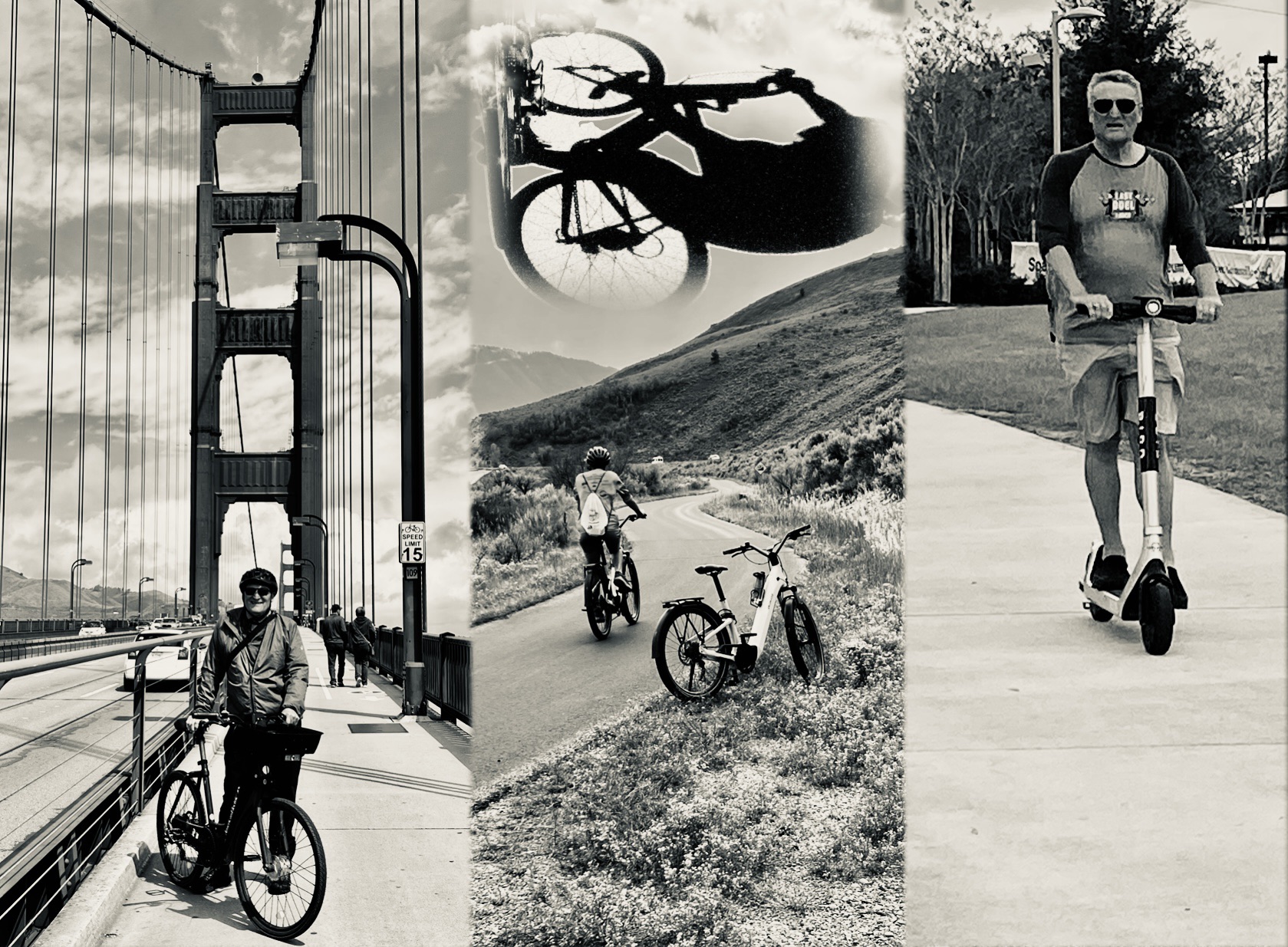
Listen, I have e-biked the hilly streets of San Francisco and the wide-open spaces of Wyoming. Enjoyed both experiences immensely.
Heck, I’ve even trundled around GNV on the odd rental e-scooter.
So far as I’m concerned, anything – bikes, e-bikes, e-scooters or magic carpets (trust me, they’re coming) – that will get people out of their cars and into what we bike-ped professionals like to call “micro-mobility” is OK with me.
But… But…
But here’s the thing.
I was executive director of Bike Florida, back when e-bikes were something they mostly rode in Asian countries. But knowing that e-bikes were coming we began to have serious conversations about whether or not they would be acceptable on our tours.

We used to accommodate upwards of 500 riders on week long tours that took in several Florida towns and cities. And it might seem counter-intuitive, but the more bikes we had sharing the road with cars, the safer all of our riders were.
A distracted motorist might easily fail to see one or two cyclists. But when there are 500 bikes strung out along several miles motorists tend to notice…and drive appropriately.
There really is safety in numbers.
But here was the problem we saw coming with e-bikes.
What happens if you have 500 cyclists sharing a road with motor vehicles. Most of said riders moving along at an average speed of, say, 10-12 mph?
And then maybe there are, say, 50 cyclists mounted on e-bikes that can travel 30 mph or faster?
Will the e-bikes be content to go with the flow? Or will they weave in, out and around the slower cyclists to get ahead of the crowd? Might they even try to weave in, out and around motorized traffic?
The prospect scared me.
I left Bike Florida before that conversation was resolved. But I think about it all the time when I see GNV’s growing number of e-bike and e-scooter riders – some of whom are quite new to cycling in general and not all that familiar with the rules of the road – sharing city sidewalks with mothers pushing baby carriages, elderly people with canes or walkers, dog walkers or traditional cyclists who are simply afraid to ride in the streets for fear of being hit.
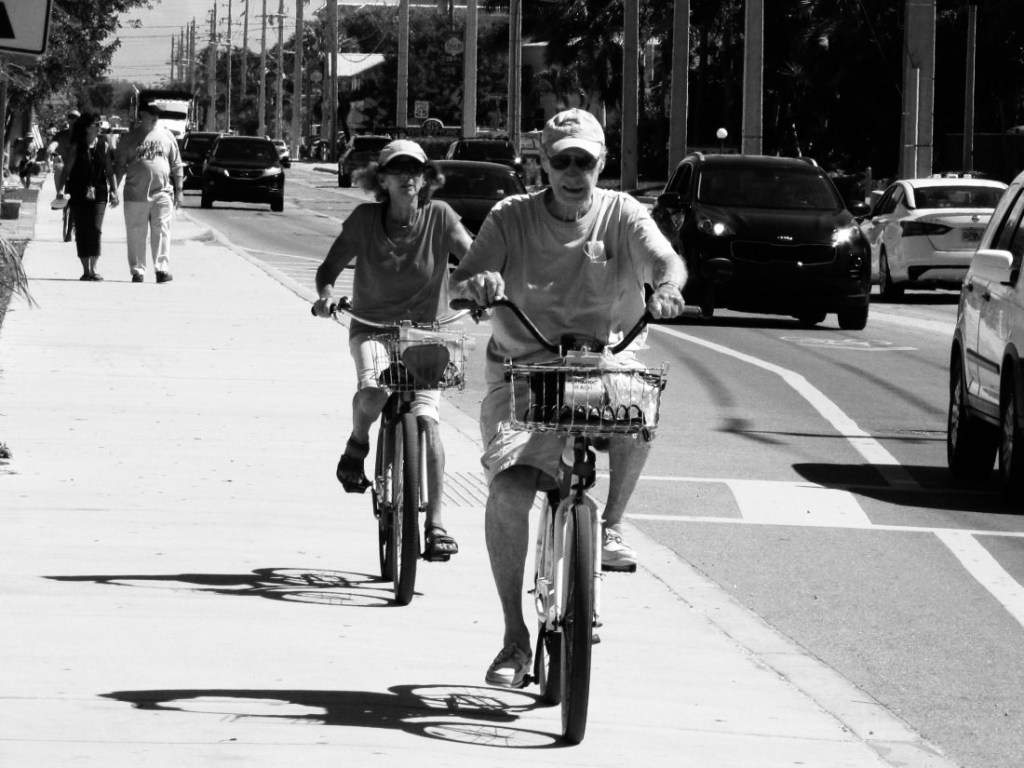
And what is the potential for collisions on a Sunday when the Gainesville-Hawthorne Trail is alive with users – runners, walkers, kids in wagons, road cyclists, people pedaling trikes and, increasingly, e-bikers equipped for speed?
Basically what’s happened to e-bikes is the same thing that happened to cars.
Their manufacturers knew that we autoAmericans crave a “need for speed.” And so, following the classic car model, they obliged by making their e-bikes and scooters bigger, heavier….and faster.
Paul Simpson is a member of the Pedestrian and Bicycle Coalition of Florida and spends quite a bit of time thinking about how to make our streets and roads safer for everybody.
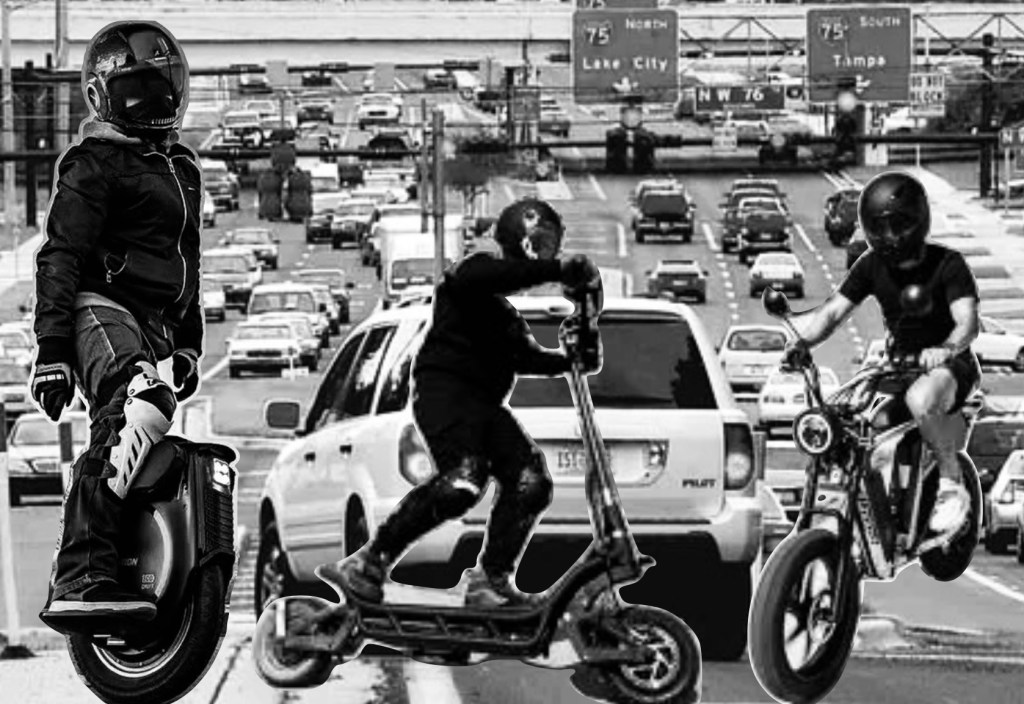
At one conference, he recalls, “I had two or three state troopers come up to me and ask: What do I do with a one-wheel electric motorcycle that goes 70 mph?
And, yes, there are e-unicycles that go amazingly fast.
“Why do we need all that speed? We know that speed kills,” Simpson asks.
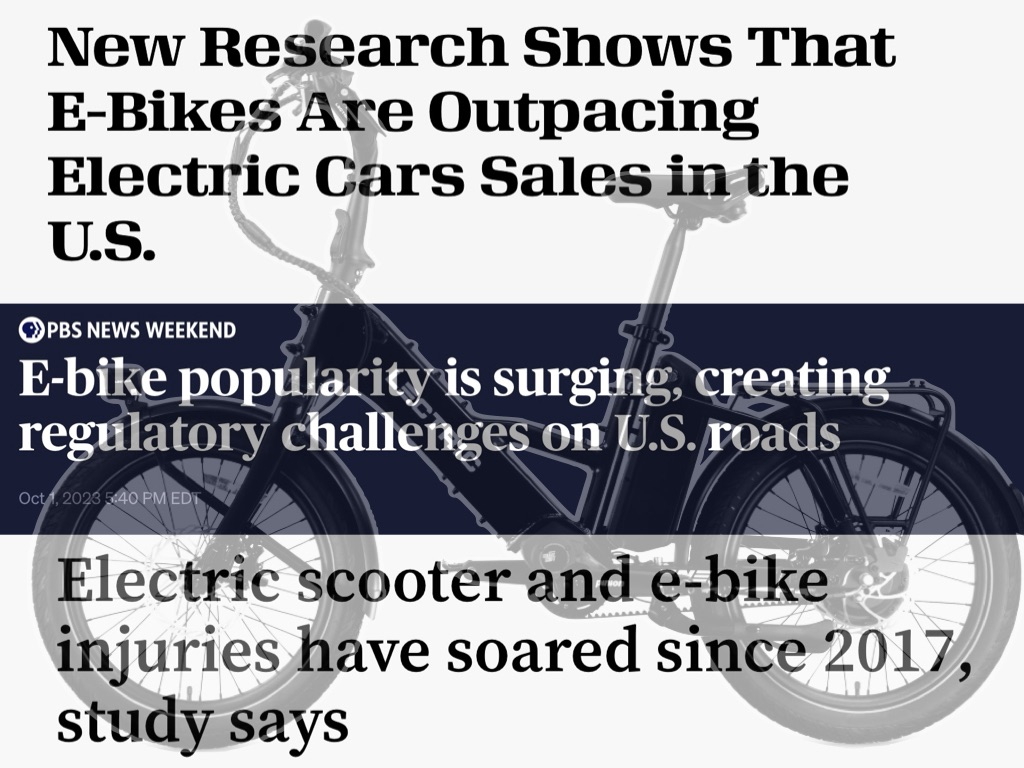
Right now we know two things about e-bikes. That their sales are surging. And that e-bike injuries are on the upsurge as well.
Well, we know three things, really: The other thing being that we’re not ready for these new personal mobility e-gadgets from a regulatory or public safety perspective.
Simpson, a research coordinator with UF’s School of Sustainable Infrastructure & Environment says “in the case of e-bikes, the technology got ahead of the legislation. It is a confusing time for safety professionals and the public.
“The current laws for bikes and other modes of (micro-mobility) transportation are insufficient for the many new forms of vehicles available in the market, but making new legislation is not a fast or easy task.”
Here in GNV a rash of UF student fatalities on University Avenue and elsewhere in recent years more of less jump-started this city into taking biking bike-ped safety much more seriously. And we’re making some progress – though not nearly enough – in promoting traffic-calming street designs, protected bike lanes and other safety measures.

Ultimately, I believe, the key to it all is SLOWING DOWN all GNV traffic. And that’s going to difficult because so many of our urban streets are really stroads that were designed to prioritize fast driving over saving lives.
“ I’m truly at a bit of a loss,” says Simpson. “until we have better solutions, we have to treat them (e-bikes) like cars and motorcycles even if they look like bicycles. Until something better comes along, we have to depend on law enforcement on side of the road.”
As an e-bike agnostic, I second that.

 FreeGNV