


This is a piece I wrote for the Gainesville Sun about the Hippodrome’s now inoperable 113-year old elevator. On Sunday, Jan. 14 at 2 p.m. the Hipp is sponsoring a panel discussion about “the historic challenges” that come with maintaining an historic building.
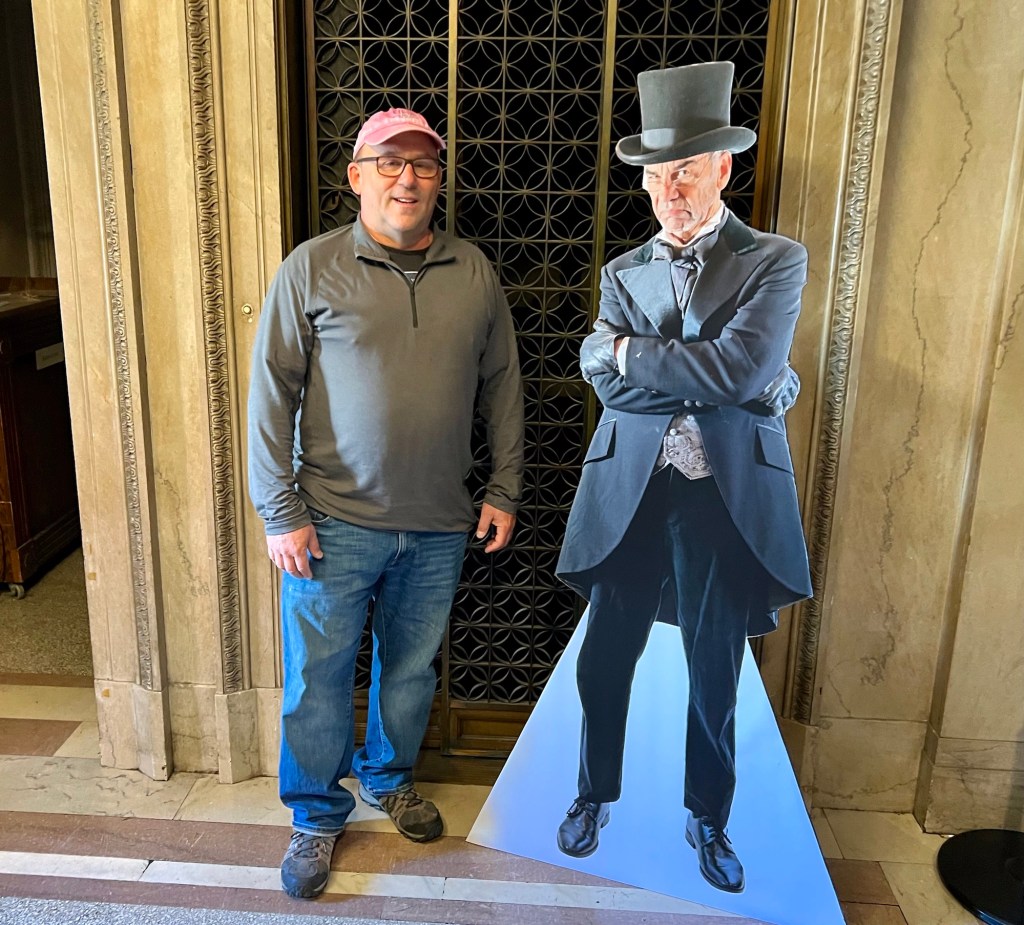
For Ken McGurn, riding the Hippodrome’s elegant but antiquated elevator to the second floor main stage was part of the essential Hipp experience.
“I love it,” said the downtown businessman and long-time Hippodrome patron. “It’s historic. It’s fun to ride. And on occasion they even let me drive it, which makes it even cooler.”
Alas, these days anybody wanting a lift on the Hippodrome’s 113-year old, manually-operated elevator will find its entrance blocked by a life-sized cardboard cutout of Ebenezer Scrooge.
Which seems appropriate, since the elevator ceased operation during the Hipp’s holiday performances of “A Christmas Carol” and “The Ultimate Christmas Show (Abridged)”.
The ancient elevator has “been deemed unsafe to use and needs to be repaired,” said facilities manager Bob Robins. “Parts are worn out and can’t be replaced.”
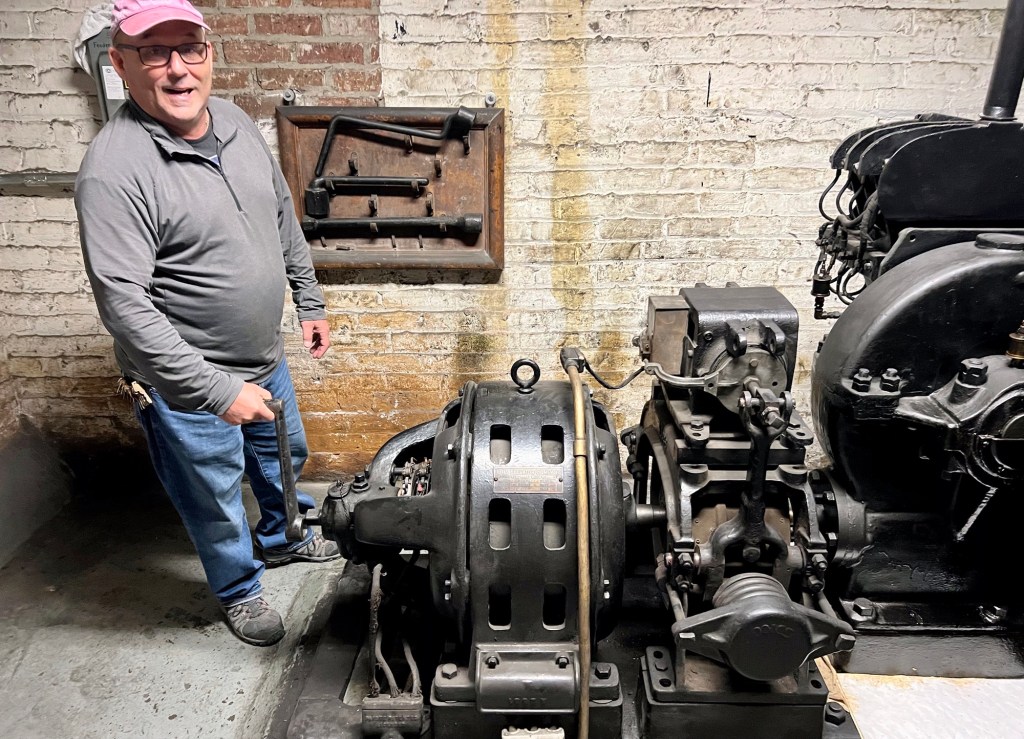
As a result Hipp personnel had to scramble to assure access to both performances for ticket holders who were physically unable to walk up the stairs to the main stage.
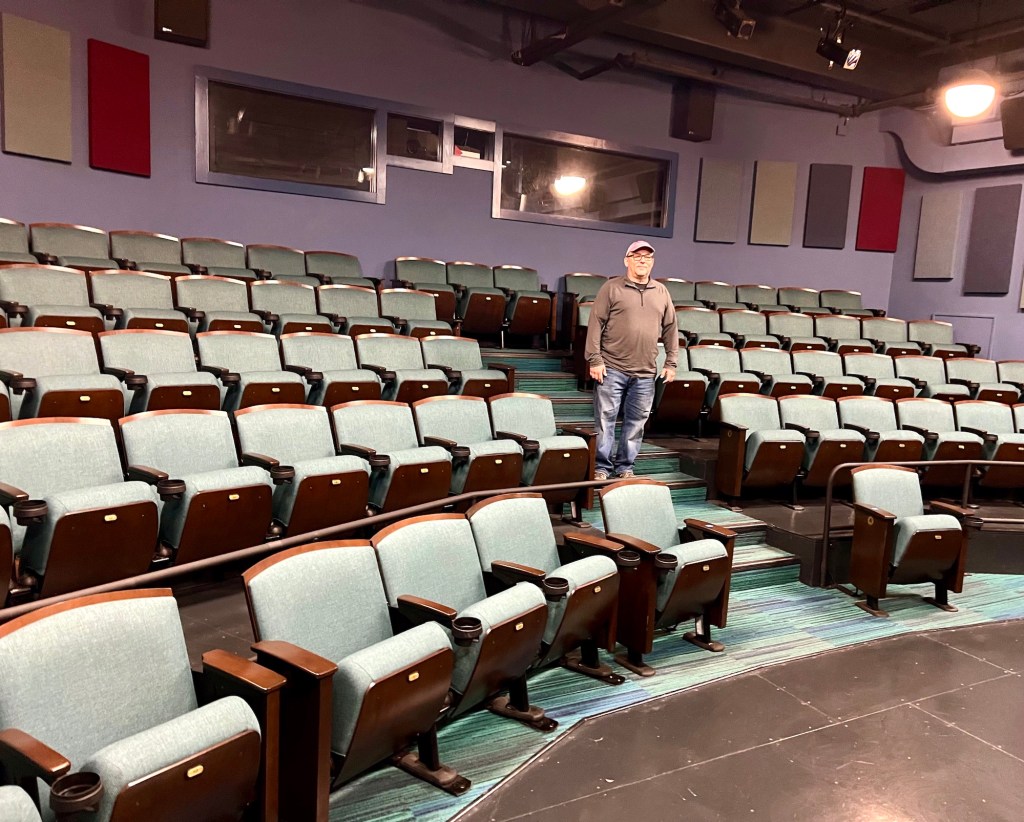
As a short term measure, holiday season patrons were treated to simulcast showings in the Hippodrome’s newly renovated downstairs cinema theater. “It wasn’t a perfect solution,” said Artistic Director Stephanie Lynge, “because it wasn’t live theater” for the 40 patrons who opted to watch downstairs. To help sweeten the experience, cast members of both plays were dispatched to interact with downstairs viewers.
As of now, it is uncertain when, or even if, the elevator can be repaired or at what cost. The historic circa 1911 downtown post office building is leased by the Hippodrome but owned by the City of Gainesville. And city officials have reached out to Otis Elevator, the original manufacturer, for assistance.

“There’s a meeting this month between city staff and the original manufacturer’s ‘modernization team’ where we’ll learn more about repairing and restoring the elevator to operating condition,” said Rossana Passaniti, Gainesville public information officer.
The City’s intent, according to Gainesville Chief Operating Officer Andrew Persons, “is to try to restore access to the second floor as quickly as possible.”
A timeline for restoration or replacement of the elevator remains uncertain, however. In the meantime, Robins said, “we have accessibility issues” that the theater needed to address sooner rather than later.
Which is why the Hippodrome is launching its “Alternate Access Theater,” initiative. And not just for its upcoming production of the musical “Next To Normal,” which premiers on Jan. 26, but for the remainder of the theater’s season. And perhaps beyond.
Basically that will mean replicating as closely as possible in the 79-seat downstairs cinema space the performances taking place on the 265-seat upstairs main stage. Toward that end, the Hippodrome has extended the play’s run by two days in order to perform three “concert style” performances of “Next To Normal” in the downstairs theater on Feb. 24 and 25.
“We will bring down all the performers downstairs,” said Lynge. “They be performing the musical” but without benefit of the stage sets that have been constructed upstairs.
Because the downstairs venue is smaller, Lynge thinks the performances there “will be even more intimate” than those upstairs, “I think its going to be a really cool,” she said.
For the remainder of the season – and continuing into next year if necessary – Lynge said the theater intends to match upstairs and downstairs staging and performance factors as closely as possible.
“Live theater is what we bring to the community, and we are absolutely committed to bringing live theater” to viewers who cannot access the upstairs main stage.
As part of its community outreach efforts the Hippodrome has scheduled a panel discussion on Sunday, Jan. 14 at 2 p.m. to talk about “the historic challenges” that come with maintaining an historic building.
The objective is “to bring together a diverse group of stakeholders — private developers, architects, nonprofits, historical societies, universities, residents, and government agencies— and explore avenues for enhanced collaboration to ensure effective and sustainable historic preservation practices,” according to a Hippodrome press release.
“We’re going to be reaching out and doing a huge campaign to make sure everybody in the community knows” about the aging Hipp’s situation, Lynge said.


 FreeGNV