


We came to Yellowstone National Park for all the usual reasons. The bison, the elk, Old Faithful, huckleberry ice cream, to escape the still lingering GNV heat.
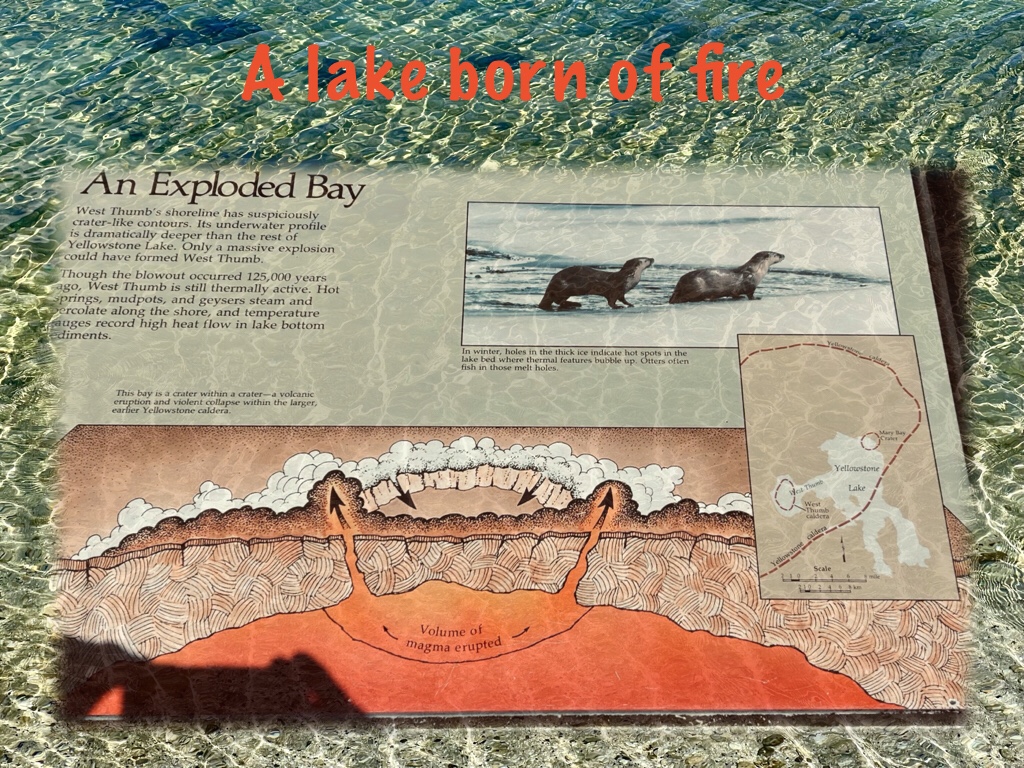
Later for all that. First I want to tell you about Yellowstone Lake. All a boil and a bubble here/ All placid icy blue there.
Oh, and it sits ground zero smack atop the still smoldering remnants of a super volcano.
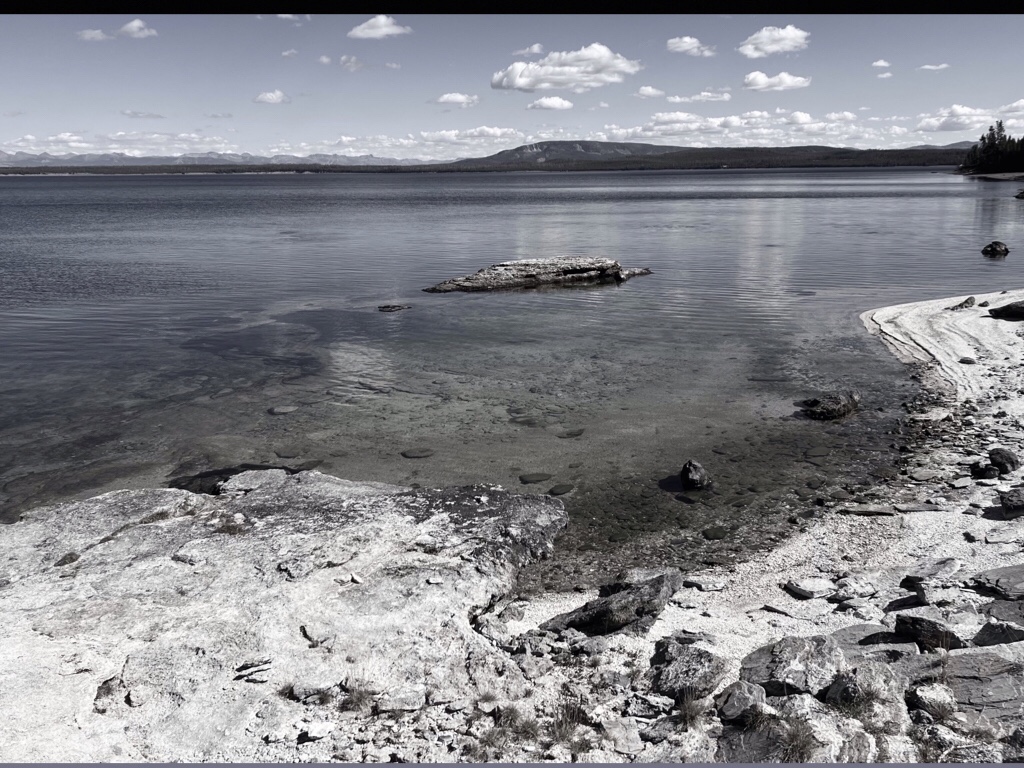
Under the seemingly placid waters of Yellowstone Lake lies the collapsed remains of a supervolcano that erupted 640,000 years ago. National Park Service.

Curses! Beaten out of the world lake-at-high-altitude record by Titticaeca. (Which, admittedly, has a much cooler name than Yellowstone.)
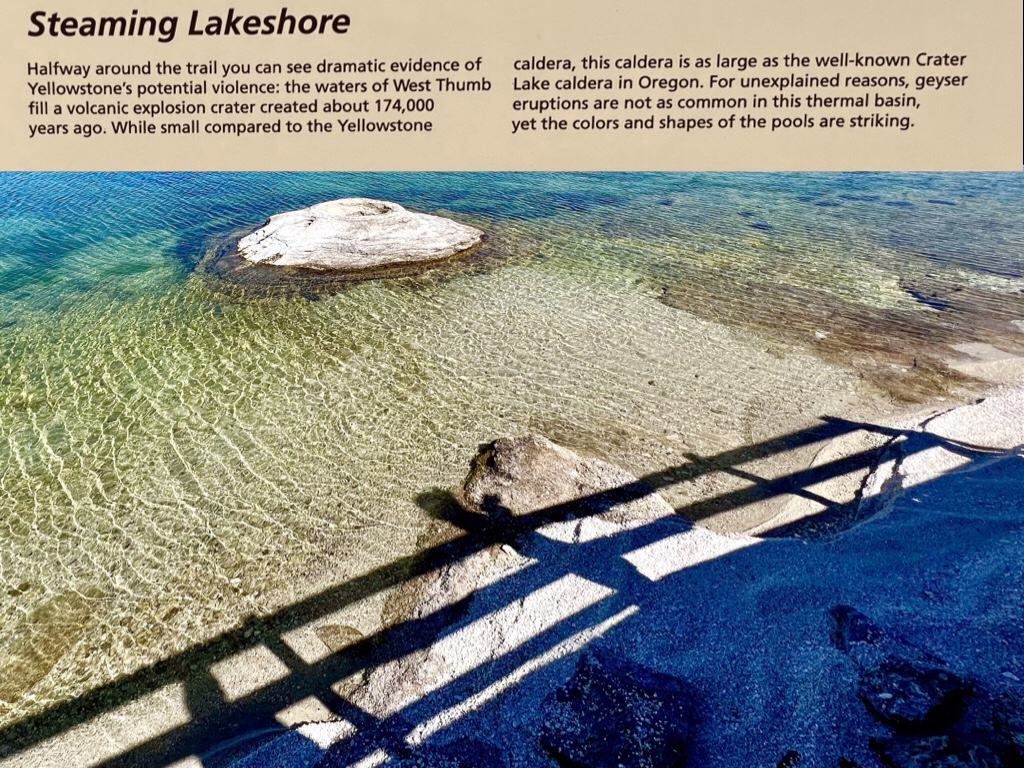
But that’s not the point. The point is that this is a lake of startling contrasts.
It’s a trout fisherman’s dream. But if the trout strays anywhere near parts of the lake with temperatures as high as 250 degrees, you’ll catch it pre-cooked.
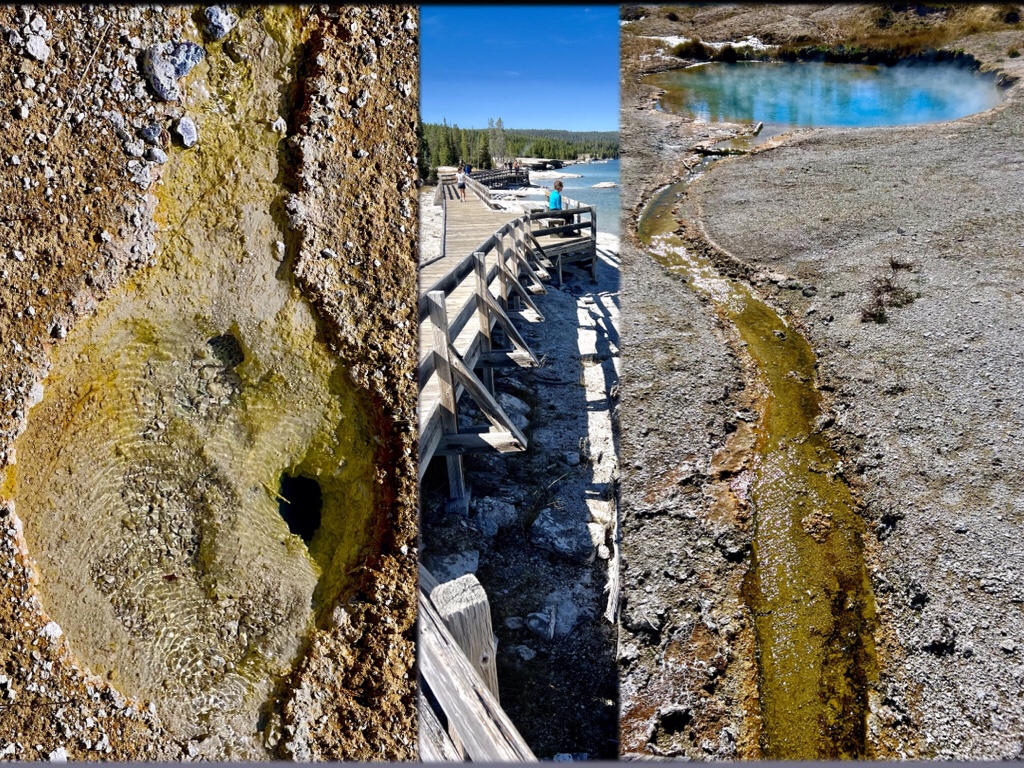
Stroll along its placid shore and you can see all manner of clues that something sinister still lurks beneath.
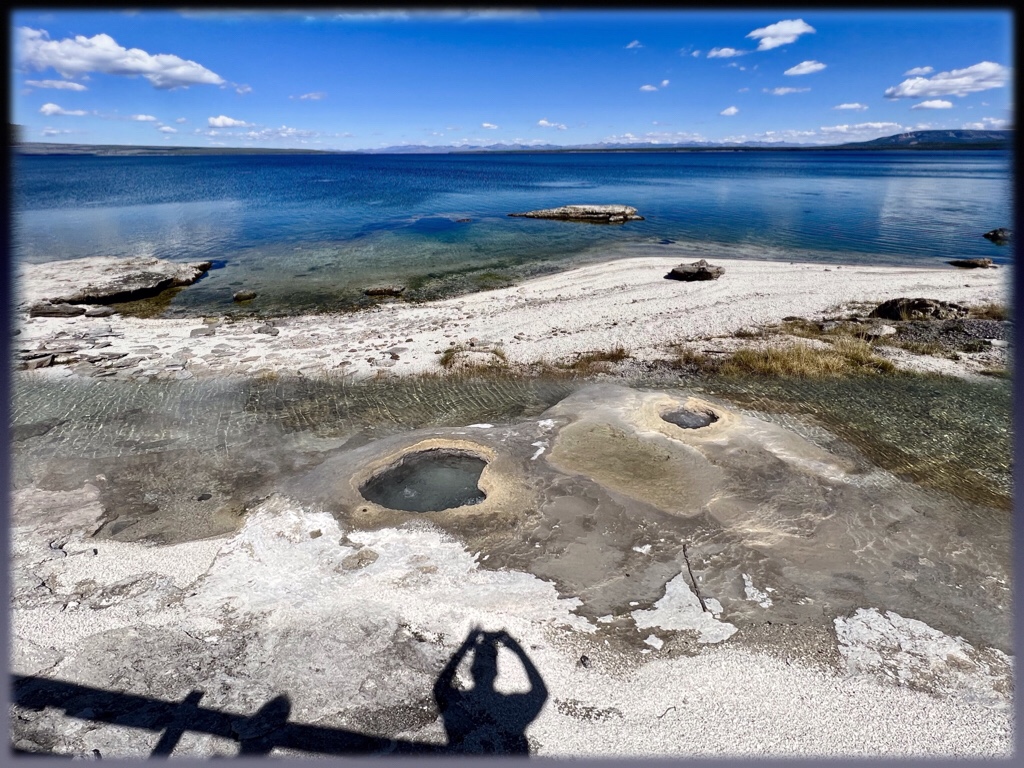
Figuratively, if one could pour all the water out of Yellowstone Lake, what would be found on the bottom is similar to what is found on land in Yellowstone: geysers, hot springs, and deep canyons. National Park Service.

Conditions in Yellowstone Lake are similar to those that occur near the famous hydrothermal vents on the Pacific Ocean’s mid-ocean ridge. Nutrient- and mineral-rich submarine fountains support incredible plant and animal communities, including bacterial mats, sponges, and earthworms. NPS.

Near where we encamped were several hot springs which boiled perpetually. Trapper Osborne Russell‘s diary of 1836.
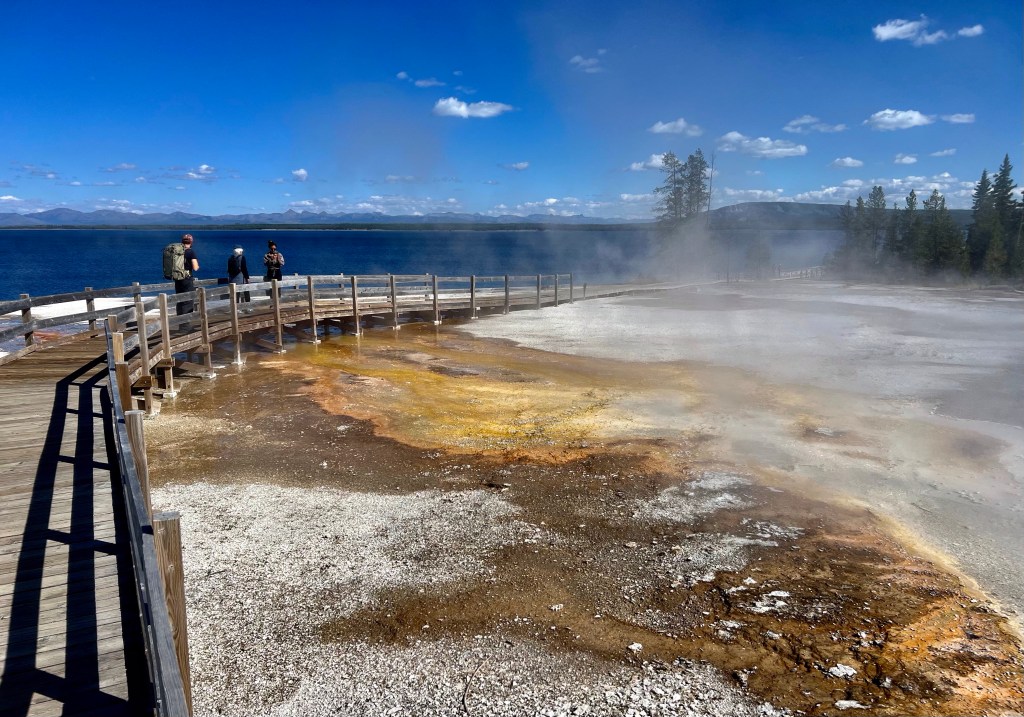
Near these was an opening in the ground about eight inches in diameter from which hot steam issued continually with a noise similar to that made by the steam issuing from the safety valve of an engine, and could be heard five or six miles distant. Russell

A powerful earthquake and a big landslide could displace enough water in Yellowstone Lake to uncork a hydrothermal explosion. Lisa Morgan, Ph.D., with the U.S. Geological Survey

I dunno. I think the lake is laughing at us as we stride so carelessly along its shore.
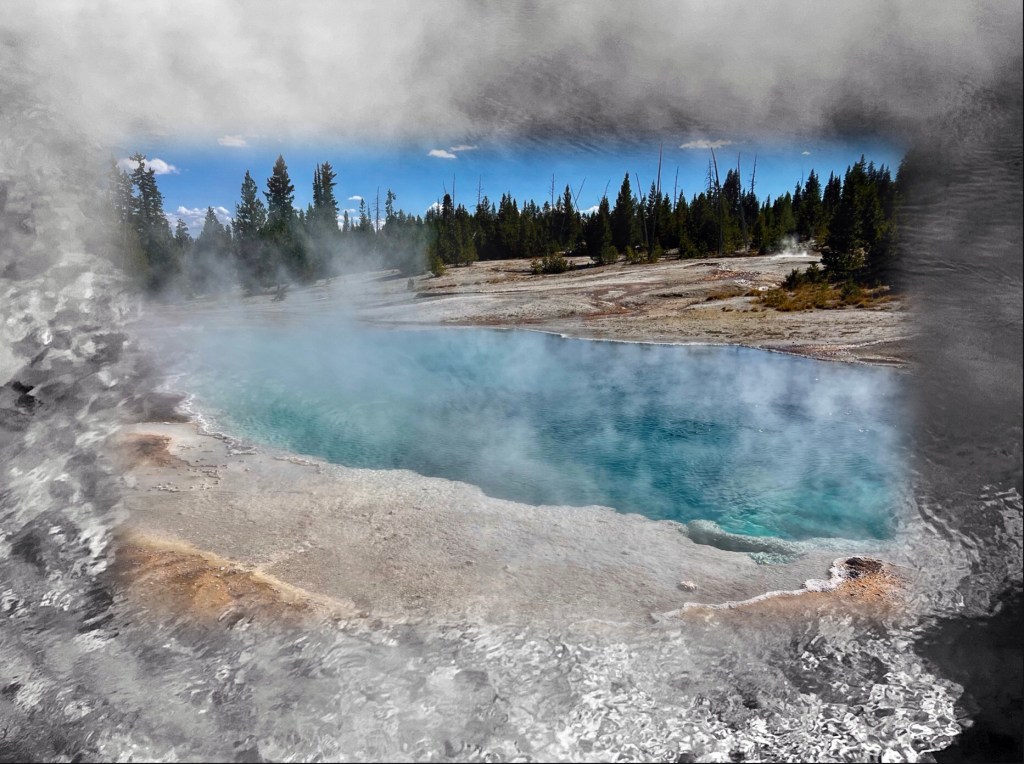
Heedless of the inferno that awaits just beneath.

 FreeGNV