


Gainesville and Alachua County have jointly declared a “traffic violence crisis.” And for good reason: It is a rare week indeed that someone – often multiple someones – are not killed or injured by traffic violence in this university city and county.
“We have reached a point of emergency on our roadways,” says GNV Mayor Harvey Ward. “Some folks are being hurt in parking lots, some on city streets, a lot more on county roads and even more on state roads.”
So far, neither the city nor the county have done very much by way of confronting this emergency. But as many Vision Zero cities and counties have discovered, saying you intend to reduce traffic violence deaths and actually doing it are two different things.
But here’s something that GNV and Alachua County leaders can start to do almost immediately to show that they are committed to leading by example.
And because this is indeed a “company town,” and the company in question happens to be government, there is an opportunity for the University of Florida and Santa Fe College to lead by example as well.
The most effective thing cities and counties can do to combat traffic violence is to SLOW DOWN TRAFFIC!
Again, that is easier said than done. Because we have for decades designed our streets and roads to encourage fast driving, reversing that trend figures to be a Herculean task.
But in the last couple of years we have seen both GNV, the Florida Department of Transportation, UF and Alachua County commit to reducing traffic violence on University Avenue and elsewhere.
All of those partners can lead by example by employing cutting edge technology in their own fleets. Publicly owned vehicles, after all, constitute a substantial part of this community’s traffic flow.
Let’s commit to installing ISA (Intelligent Speed Assist) technology in as many GNV, Alachua County, UF, Santa Fe and, yes, FDOT fleet vehicles as possible as soon as possible.
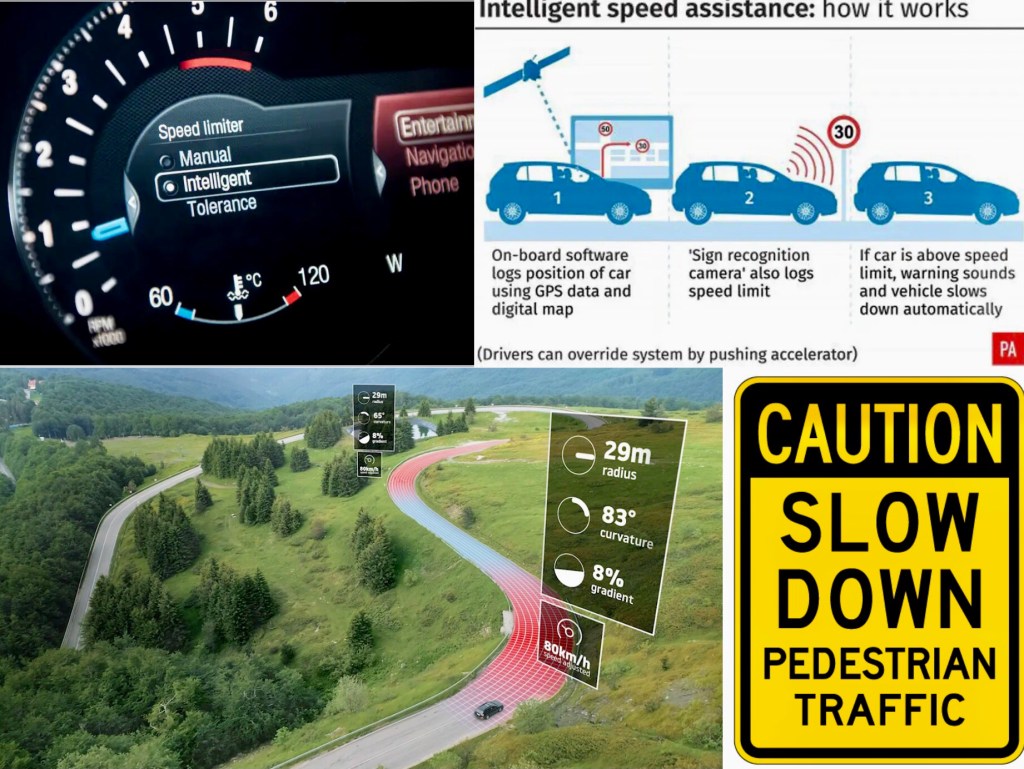
This from Streetsblog:
Already required on new cars in Europe and piloted on city-owned vehicles in New York City and elsewhere, ISA systems use GPS or road-sign recognition cameras to detect the current limit, and either warn the driver to slow down when they exceed it or automatically throttle the car’s velocity, with an override option that allows motorists to speed up briefly to pass.
If municipalities accept the challenge to demonstrate the life-saving potential of ISA on U.S. roads, the team behind the campaign hopes that it will demonstrate to federal regulators that all cars should come equipped with it by law.
The Safer Fleets Challenge is aimed at getting at least 50 communities across the U.S. to commit to installing Intelligent Speed Assist systems in at least part of their fleets by 2025.
“It’s hard for me to understand why public employees, [if they’re not operating] emergency vehicles, should violate the speed limits set by their own government,” Mike McGinn, executive director for America Walks, which is leading the effort, told Streetsblog.
“I think it’s a it’s a great starting point to build acceptance, build understanding, and ultimately, lead to broader safety standards.”
The cost of installing ISE technology on a retrofitted vehicle is roughly $1,200. That’s not exactly cheap, but if done incrementally – vehicle by vehicle as funding becomes available – neither is it unaffordable
We have a traffic violence emergency in this university community. One way to combat it is for GNV, Alachua County, UF, SFC and other community public partners to embrace the Safer Fleets Challenge.
To lead by example.


 FreeGNV