


This is a piece I wrote for the Gainesville Sun.
From a news item that appeared in the Gainesville Daily Sun, August 21, 1905:
The product of Boulware Spring has always shown by analysis to be second to none in the South, and inferior only to the famous Poland springs water of Maine. The city will be blessed with as pure water as can be found in the world.
No idle boast that. In fact, the City of Gainesville was born of – in a very real sense, baptized by – spring water of a purity that befitted a young, self-proclaimed “Healthful, Progressive City.”
And make no mistake. The founding of Gainesville’s first water works at Boulware Springs, shortly after the turn of the last century, was sorely needed.
“Early Gainesville residents depended on shallow wells and surface streams for their source of water,” states the application that got the circa-1905 Boulware Springs water works listed on the National Register of Historic Places. “A common city well located in front of the county courthouse is said to have been primed with water flowing from dirty horse troughs.“

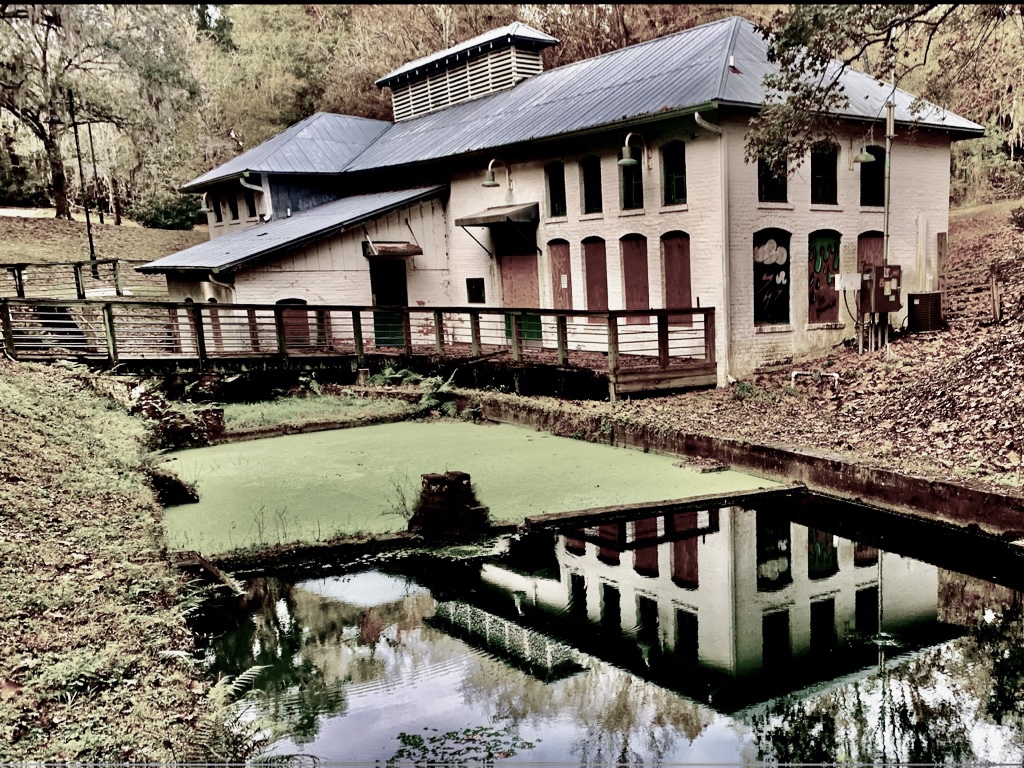
Not surprisingly, the more than century-old pump station perched on a bluff overlooking Paynes Prairie has not aged well. These days the industrial-style metal hip-roofed, masonry building sits unused and boarded up, a frequent target for graffiti artists.
Which is why City Parks, Recreation and Cultural Affairs is now in the planning process for a major Boulware Springs restoration. Expected to cost at least $2 million in Wild Spaces and Public Places funding, the restoration will likely be completed in 2025.
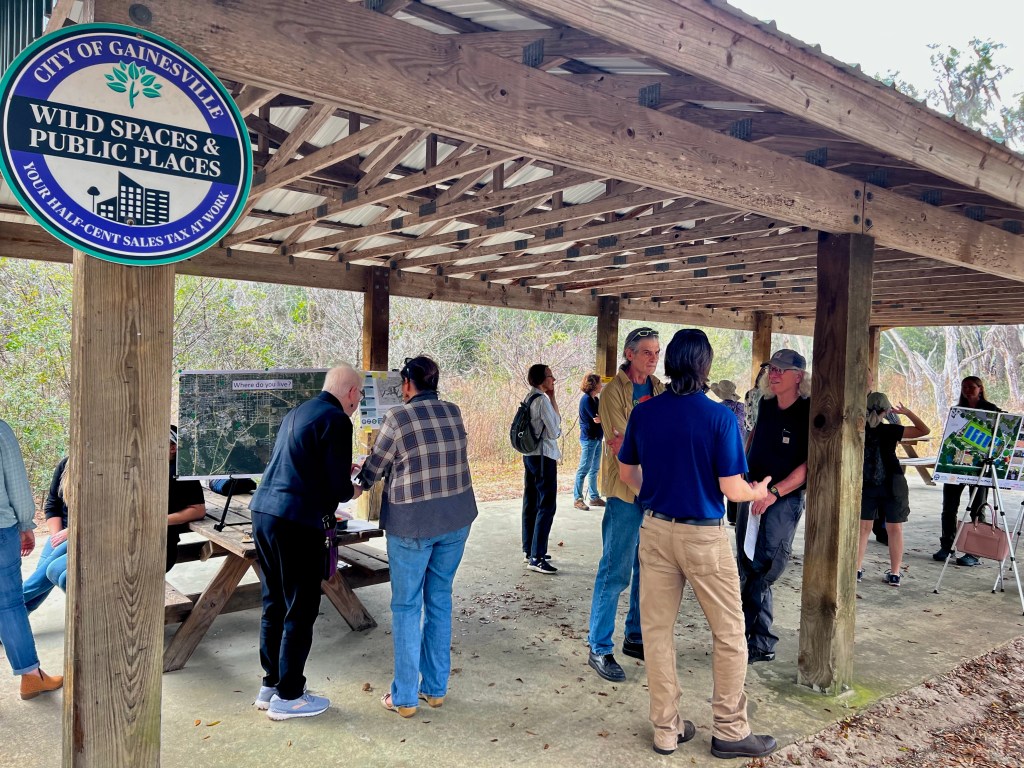
Last Sunday, a public workshop was held at Boulware Springs Nature Park to begin collecting suggestions and comments about the restoration.
“Overall the group consensus was that the community would like to see the park renovated and the building brought up to a usable condition again,” said Betsy Waite, project manager. “There are concerns about balancing the needs of a nature park with keeping it quiet and dark at night and the need to have an active building that would be available for rentals, events, meetings and other functions.
“There are some neighborhood concerns about how much paved parking there should be, and whether we want to have just one entrance to this facility versus two,” as currently exists. “The option to remove paved surface would help with storm water management.” But because Boulware Springs provides parking for Gainesville-Hawthorne Trail users, “there needs to be a balance” between paved and unpaved surfaces.
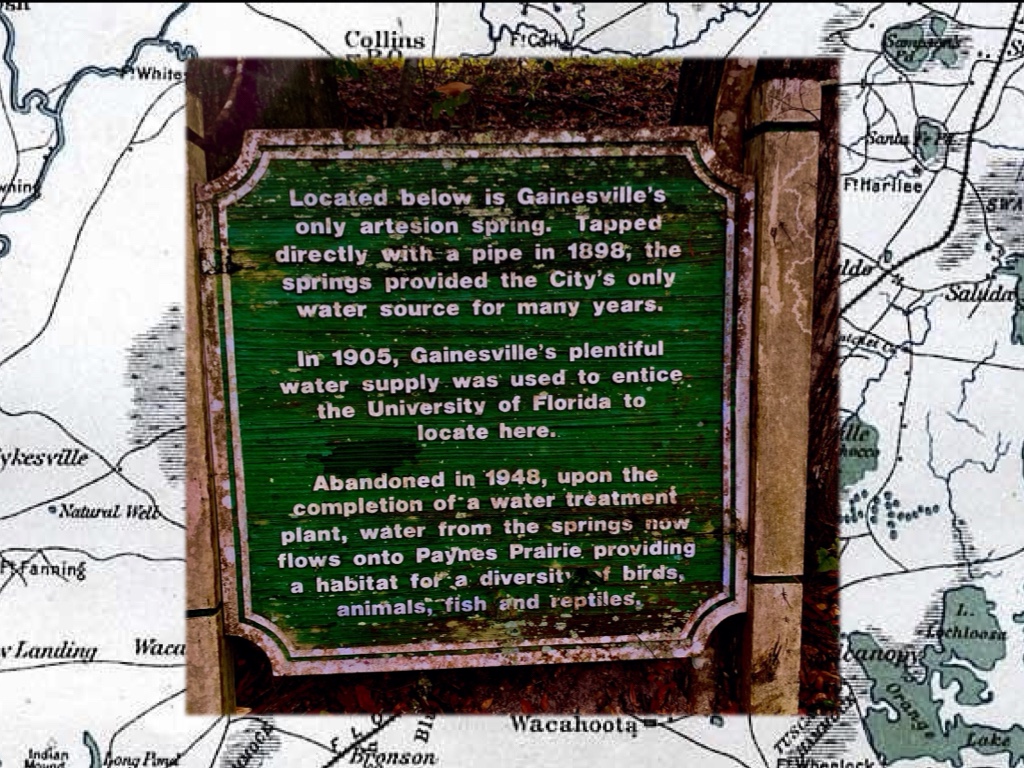
Boulware Springs’ place in Gainesville history cannot be overstated. It was here that Alachua County residents gathered for a picnic in 1854 and, after considerable debate, voted to move the county seat from Newnansville to a brand new city named after a veteran military officer who fought in the Mexican-American and Seminole wars.
The first steam-driven water plant was built there in 1892 and was capable of pumping 300,000 gallons of water a day. It was the spring’s prodigious output that helped lure the University of Florida to Gainesville in 1905 with a promise of free water.
The existing building was constructed in phases between 1905 and 1908.
“The Boulware Springs Waterworks is an excellent example of late 19th or very early 20th century industrial architecture,” states the National Register of Historic Places application. “…this early industrial building was built not only for utility but for beauty as well. The standing seam metal hip roof perched upon the white brick provides a pleasing contrast. The extensive fenestration and segmented arches add greatly to the beauty of the structure.”
Although Boulware Springs ceased to be the main water source for the city as early as 1913, it continued to serve as a supplementary source for many years after. And it provided boiler water to the Kelly Power Plant until 1977.
“The bones of the building are still in pretty good shape,” says Waite. But the building will likely require extensive electrical, plumbing and roofing repairs, as well as additional work to ensure it is ADA compliant.
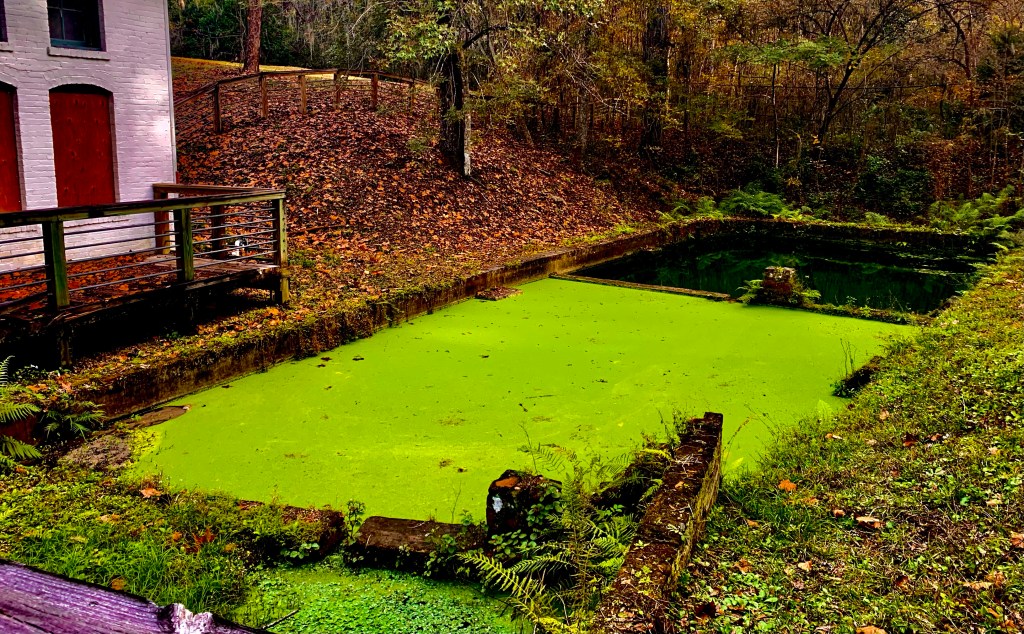
In addition, the spring-head itself has been depositing silt downstream for many years. Waite said “the bulk of the (restoration) cost will probably be spent on controlling sedimentation, preventing erosion, stabilizing the banks in and around that building,” and on improving parking areas, pathways, earthworks and grading.
At last Sunday’s workshop members of the public were invited to post suggestions for renovation project. “Allow outdoor lighting only for events,” one note read. “Reduce paved parking, use grass or other impervious surfaces,” said another. “We should be doing everything possible to encourage the unstructured play of children outdoors,” one note insisted, adding that the park’s “fences discourage this.”
Perhaps the most ambitious suggestion came from former County Commissioner Robert Hutchinson, who wants the City to consider building a “lazy river” type water feature at the park.
In 1990, Hutchinson said, then-Gainesville Mayor David Coffee and then-House Speaker Jon Mills tried to get funding for a water park at Boulware Springs.
A water park would “take pressure off the Ichetucknee, Santa Fe, and Rainbow Rivers that are being over-run with tubers,” Hutchinson wrote in a Facebook post, “and many of the folks don’t care whether they are in a natural setting or not – they just want to get wet and hang out with their friends.”
He estimates that a water feature incorporating a lagoon and river run could be built for $9 million to $12 million, and would require only about 8 acres of the park’s 100-plus acre footprint. “If the City is interested in making this work, a public-private partnership would be the way to go, as the private sector can build more quickly and efficiently,” he wrote.
The old waterworks building was last renovated in 1990. But the facility was rarely used thereafter and was not very well maintained. Waite said that when the renovations are complete day-to-day management of and programming for the park will be turned over nearby Depot Park staffers.
Waite said the city continues to welcome public comments about what they would like to see at Boulware Springs. Comments can be sent to her email address, waiteeed@gainesvillefl.gov.
She estimates that the planning, design and permitting process will take 12 months to complete, and that construction will begin in 2024 and require another 12 months.


 FreeGNV